
VIVOSUN AeroDrain D12
4.3Editor score
Up to 12L daily removal
Vivosun app integration
Auto restart after outage
This guide compares the top ten dehumidifier for grow tents options based on capacity, noise, smart features, and suitability for controlled indoor gardening
Maintaining optimal humidity is critical for plant health and yield in indoor grow tents. A dedicated dehumidifier prevents mold, mildew, and nutrient lockout by regulating relative humidity levels throughout the growth cycle effectively.
We evaluated ten leading units designed for grow spaces, focusing on moisture removal capacity, energy efficiency, and smart automation capabilities. Each product was assessed for reliability, noise levels, and ease of integration with existing tent systems.
Each pick below highlights specific strengths for different tent sizes and budgets. While pricing may fluctuate due to market conditions, these models represent current top contenders for serious indoor gardeners seeking precise climate control.
4.3Editor score

3.8Editor score
4.3Editor score
The following table provides a side-by-side comparison of all ten selected units, highlighting key specifications, removal capacity, and specific use cases to help you identify the right fit for your grow tent setup.


The AC INFINITY HYDRONE 5 stands out as a precision instrument for indoor growers needing exact humidity control. With its proprietary PWM-controlled rotary motor, it offers ten distinct drying levels that allow for unmatched specificity in moisture management.
We may earn a commission when you buy through this link, at no additional cost to you.
This unit excels in hot and cold environments where standard compressors might struggle. The ability to duct dry air directly into a tent ensures you are managing climate zones independently from the grow space itself.
While it offers advanced features like VPD automations and data charts, these may be overkill for casual hobbyists. The initial configuration requires some technical understanding of controllers, which can deter less experienced users.
For serious growers seeking to automate their environment and maximize yield through precise humidity regulation, this model is the top recommendation. It bridges the gap between simple dehumidification and full climate control.
The PWM motor allows for granular control over drying levels, ensuring your plants are never subjected to drastic humidity shifts that could stress them during sensitive growth phases.
By connecting to smart controllers, this device can communicate with fans and lights to create a unified climate system that responds automatically to changing conditions inside the tent.
We may earn a commission when you buy through this link, at no additional cost to you.
The VIVOSUN AeroDrain D12 is a robust solution for medium to large grow tents requiring significant moisture removal. With a capacity of up to 12 liters per day, it handles high humidity environments effectively without constant intervention.
We may earn a commission when you buy through this link, at no additional cost to you.
Smart features are a major highlight here, allowing you to monitor temperature and humidity remotely via the Vivosun app. This connectivity is crucial for growers who cannot check their tents daily or want to automate synchronization with other devices.
Setup is straightforward with tool-free installation, and built-in caster wheels make it easy to reposition as your grow space evolves. The unit automatically shuts off when the tank is full, preventing overflow issues and ensuring safety.
This model is ideal for users already invested in the Vivosun ecosystem who want seamless integration. Its powerful compressor ensures consistent performance, though you should ensure your tent size matches the recommended 5×5 ft footprint for best results.
Accessing real-time data via the app allows you to react quickly to humidity spikes, even when you are away from home, providing peace of mind for valuable crops.
The auto-restart feature ensures that if a power outage occurs, the unit returns to its previous settings immediately, preventing humidity from creeping up during your absence.
We may earn a commission when you buy through this link, at no additional cost to you.
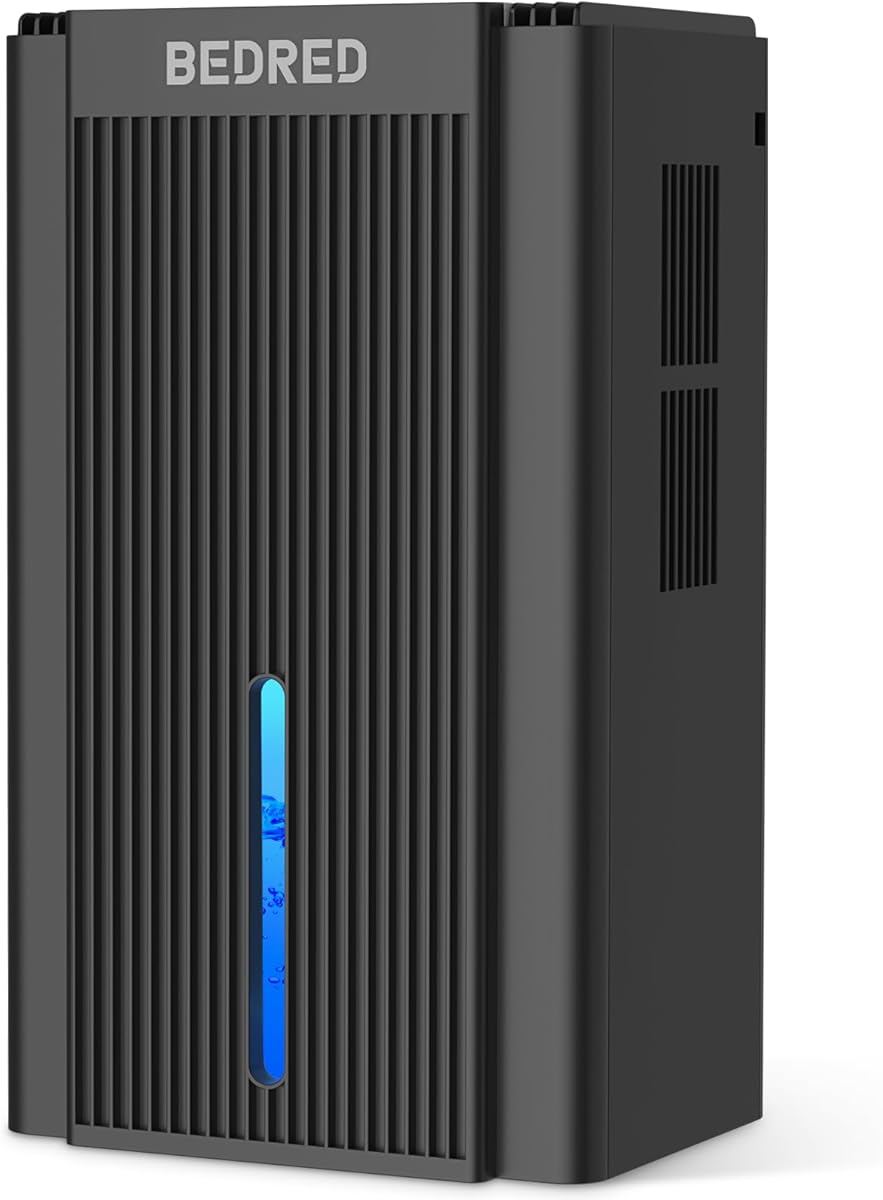
The BEDRED Dehumidifier offers an affordable entry point for smaller grow tents where high capacity is not necessary. Its semiconductor technology keeps noise levels low, making it suitable for setups in living spaces or noise-sensitive areas.
We may earn a commission when you buy through this link, at no additional cost to you.
While it may not handle large volumes of moisture daily like compressor units, it is efficient enough for maintaining safe humidity levels in compact grow environments. The 95oz tank provides a decent buffer before needing a manual dump.
The inclusion of sleep mode and ambient lighting suggests a design that fits well in residential settings. However, growers should note that semiconductor units are generally less effective in very hot or humid conditions compared to compressors.
For hobbyists running small 2×2 or 3×3 tents on a budget, this unit provides reliable protection against mold and mildew. Its compact size allows it to fit discreetly into tight corners without obstructing equipment or plants.
The ultra-quiet operation means the unit does not disturb sleep or nearby activities, which is beneficial for indoor setups located in bedrooms or shared living spaces.
Intelligent auto-shutoff ensures the device stops running when the tank is full, protecting your equipment from water damage and eliminating the need for constant monitoring.
We may earn a commission when you buy through this link, at no additional cost to you.
This unit is specifically marketed for tight spaces like grow tents, electric boxes, and closets. The external professional grade humidity sensor allows for more accurate measurements compared to internal sensors that might read local air instead of ambient air.
We may earn a commission when you buy through this link, at no additional cost to you.
The inclusion of a flexible hose for drainage makes maintenance easier for those who do not want to manually empty a tank daily. However, the overall efficiency is lower compared to dedicated grow room units.
It operates in both automatic and manual modes, giving users some control over operation. The LED display provides clear feedback on current humidity levels, which is essential for preventing sudden spikes in moisture.
Ideal for small, enclosed grow setups where space is limited, this device offers basic protection. While not a powerhouse, it serves a niche role for preventing moisture accumulation in very specific, confined areas.
By placing the sensor separately, the unit avoids measuring air right next to its own intake, ensuring the data reflects the true environment of the tent.
The hose connection allows you to route water directly to a drain or container, reducing maintenance frequency and keeping the unit running longer unattended.
We may earn a commission when you buy through this link, at no additional cost to you.
The MARS HYDRO 38 Pints dehumidifier is designed with grow tents in mind, offering a unique design that allows it to sit outside the tent while channeling moisture out. This prevents excess heat from entering the growing environment.
We may earn a commission when you buy through this link, at no additional cost to you.
With a daily removal capacity of 38 pints, it is suitable for larger setups like 4×4 or 4×5 tents where humidity levels can rise quickly. The smart auto mode maintains your desired level between 30 and 90 percent automatically.
Maintenance is simplified by the removable and washable dust filter, eliminating the need for replacements. Integrated caster wheels make it easy to move the unit as needed within your growing area or utility room.
For growers who need serious power without bringing heat inside the tent, this model offers a balanced solution. It combines standard dehumidifier reliability with specific features intended to support plant growth cycles.
By ducting air to the outside, the unit keeps the internal tent temperature stable, which is critical during flowering when heat stress can negatively impact bud quality.
The 38 pint capacity ensures that even in high humidity conditions, the unit can keep up with moisture evaporation from plants and soil effectively.
We may earn a commission when you buy through this link, at no additional cost to you.
This model is optimized for general home use but serves well for small grow tents located in living spaces. Its ultra-quiet operation under 30 dB ensures that it does not disrupt household activities or sleep schedules.
We may earn a commission when you buy through this link, at no additional cost to you.
The 1000 sq ft coverage suggests it has enough power to handle humidity in a larger room that contains a grow tent. Automatic shut-off provides safety when the tank is full, preventing spills and ensuring worry-free operation.
The compact design with ambient lighting blends well into home decor, making it a less obvious choice for those sensitive to the look of industrial equipment. It fits easily into bathrooms or closets if the tent is nearby.
For light growers who prioritize noise levels and aesthetics, this unit is a practical choice. While it lacks specific grow features, its core functionality is solid for maintaining a comfortable humidity level in residential environments.
Sleep mode reduces noise to a whisper level, ensuring that the grow setup does not interfere with rest, which is important for households sharing the space with the grow tent.
The 1000 sq ft rating indicates strong performance in open spaces, providing a buffer for the moisture load typically generated by indoor plants in a tent.
We may earn a commission when you buy through this link, at no additional cost to you.
Designed specifically for confined spaces, this mini dehumidifier is suitable for micro grow tents or small cabinets. It operates efficiently on AC/DC power supplies, offering versatility for different electrical setups without needing specific adapters.
We may earn a commission when you buy through this link, at no additional cost to you.
The built-in temperature control switch helps maintain optimal humidity levels without requiring external controllers. It is a simple, plug-and-play solution for small areas where mold and moisture are concerns.
The auto shut-off function enhances safety by stopping operation when the desired humidity level is reached. This helps save energy and prolongs the life of the unit while preventing over-drying in small environments.
For very small setups like 1×1 tents or storage boxes for plants, this unit provides basic protection. It is not intended for larger rooms but serves its purpose well in extremely tight and sensitive spaces.
Operating on both AC and DC supplies makes it easy to place in locations with varying power sources, such as temporary setups or portable grow boxes.
Its tiny footprint allows it to fit in corners where other equipment cannot, ensuring you do not sacrifice valuable growing space for climate control.
We may earn a commission when you buy through this link, at no additional cost to you.
This small dehumidifier offers a range of features including sleep, normal, and performance modes to adapt to different humidity needs. The auto defrost function ensures it can operate even in cooler temperatures where condensation might freeze.
We may earn a commission when you buy through this link, at no additional cost to you.
Energy efficiency is a highlight with 24W consumption, making it cheap to run continuously. The 10 color lighting and timer settings allow for customization, though these are more decorative than functional for serious growing.
The 44oz tank is compact but may require frequent emptying in high humidity environments. It is best suited for small grow tents or cabinets where the water load is minimal compared to larger rooms.
For hobbyists who value features and low noise in a portable package, this unit is a good fit. It balances practical dehumidification with user-friendly controls that simplify operation for smaller indoor gardens.
The auto defrost function prevents ice buildup on the cooling elements, allowing the unit to maintain performance even if the grow tent or room drops to lower temperatures.
Three distinct modes let you switch between quiet sleep operation and high-performance drying, giving you control over how aggressively the unit handles moisture.
We may earn a commission when you buy through this link, at no additional cost to you.
Certified for safety with FCC and CE approvals, this unit is a reliable choice for various spaces including RVs. It operates below 28dB, ensuring it does not create noise pollution in small living environments.
We may earn a commission when you buy through this link, at no additional cost to you.
Five timer settings offer extensive control over operation times, letting you run it continuously or for specific durations. The auto defrost system ensures reliability even when temperatures fluctuate during different seasons.
The 44oz tank is standard for this class but requires regular maintenance. For a small grow tent in an RV or bedroom, it provides sufficient moisture control without taking up much physical space.
For travelers or renters with limited space, this dehumidifier offers a balance of performance and portability. Its quiet operation and safety certifications make it a practical choice for small, personal grow environments.
Meeting international standards like FCC and RoHS ensures the unit is safe to use near electrical equipment and plants without risk of overheating or electrical faults.
With noise levels under 28dB, the unit runs silently, ensuring that it does not interfere with sleep or work in the same room as the grow tent.
We may earn a commission when you buy through this link, at no additional cost to you.
The Pro Breeze Electric Mini uses Thermo-Electric Cooling Technology to remove moisture without a compressor. This design makes it whisper quiet and safe for use in bedrooms and offices where noise is a concern.
We may earn a commission when you buy through this link, at no additional cost to you.
It removes up to 18 oz of water per day, which is suitable for small spaces. The 52 oz tank capacity is larger than many mini units, reducing the frequency of emptying compared to similar products.
Running costs are very low, estimated at just $0.12 per day. However, the unit operates optimally between 59 and 95 degrees Fahrenheit and will not work below 41 degrees, limiting its use in cold environments.
For small grow tents in climate-controlled indoor rooms, this unit is an economical option. It is best for low-moisture environments where noise reduction is more important than high-volume water removal.
The compressor-free design uses significantly less power than standard dehumidifiers, keeping electricity bills low while still providing essential humidity control.
The lack of a compressor means there is less vibration and noise, making it safe to place directly next to living spaces without disrupting daily activities.
We may earn a commission when you buy through this link, at no additional cost to you.
Choosing the right dehumidifier involves understanding your tent size, capacity needs, and automation features to maintain healthy plant conditions.
Capacity is measured in pints or liters per day. Ensure the unit can remove enough moisture to counter the transpiration from your plants. For small tents, a low-capacity unit may suffice, but larger setups need higher daily removal to prevent mold.
Always check the capacity rating at standard humidity conditions to ensure it matches your specific grow environment needs.
Match the dehumidifier to your tent dimensions. Manufacturers often recommend specific sizes like 5×5 ft for larger units. A mismatch can lead to over-drying or insufficient humidity control.
Calculate the total air volume and select a unit that can cycle the air effectively within your enclosed space.
If your grow tent is in a living space, noise levels matter. Look for units with sleep modes or compressor-free designs to minimize disturbance. High decibels can stress both plants and occupants.
Prioritize ultra-quiet operation if the unit will be running near sleeping areas or noise-sensitive environments.
Smart features like app control and auto modes allow for precise humidity management. Look for units that can maintain a specific percentage to automate the process without constant manual adjustments.
Invest in smart units if you want remote monitoring and integration with other grow equipment for a fully automated climate.
Some units have built-in tanks, while others support hose drainage. For grow tents, continuous drainage via a hose is often preferred to reduce maintenance frequency and prevent overflow.
Check for compatibility with flexible hoses and auto-shutoff features to ensure safe long-term operation.
Growers often run units 24/7, so energy consumption affects running costs. Compressor units are efficient but consume power, while semiconductor units use less but offer less power.
Review the wattage and estimated daily cost to choose a unit that fits your budget without sacrificing performance.
Some units struggle in extreme heat or cold. Ensure the dehumidifier operates effectively within the temperature range of your grow tent. Low-temperature models are essential for cold climates.
Check the operating temperature limits before buying to avoid performance drops in seasonal conditions.
Dust filters can clog over time. Look for washable filters to reduce long-term costs. Units with easy access to filters make regular cleaning simpler and more consistent.
Prioritize models with removable and washable filters to maintain efficiency without expensive replacements.
Install the dehumidifier according to the manufacturer's instructions. If it supports hose drainage, set up the line before plugging it in to ensure continuous operation without tank interruptions.
Place the unit in an area with adequate ventilation. Avoid blocking air intake or exhaust vents with grow equipment or plants to ensure optimal performance and airflow.
Regularly clean the filters and empty the tank if hose drainage is not used. This prevents mold growth within the dehumidifier itself and maintains efficiency over time.
For vegetative growth, keep humidity between 40 and 70 percent. During flowering, aim for 40 to 50 percent to prevent mold and mildew. This range ensures healthy plant development while minimizing disease risk.
Yes, small tents need dehumidifiers because moisture accumulates quickly in enclosed spaces. Without control, high humidity can lead to powdery mildew, root rot, and reduced crop yields.
Unplug the unit and remove the water tank. Clean the filter with water and let it dry before reinserting. Wipe down the exterior with a damp cloth to remove dust and debris.
Only if it has an auto-defrost feature. Standard units may freeze in low temperatures, reducing performance or damaging the unit. Check the operating temperature range before use in cold environments.
It depends on the removal rate and humidity levels. If there is no hose drain, empty it at least daily. Continuous drainage via hose is recommended to avoid interruptions in operation.
Yes, if you need remote monitoring and automation. Smart units allow you to adjust settings and receive alerts without visiting the tent, which is valuable for long-term grow management.
The AC INFINITY HYDRONE 5, VIVOSUN AeroDrain D12, and BEDRED Dehumidifier top our list for their balance of features, reliability, and price. These models provide the control needed for successful indoor gardening.
Prioritize capacity and automation over other features. A unit that matches your tent size and allows for set-and-forget operation will deliver the most consistent results for plant health.
Always check current availability and prices before purchasing. These models are subject to change based on market demand, so verifying details ensures you get the best deal.