
ASRock Intel Arc A380 Challenger ITX
4.3Editor score
Compact 2-slot ITX design
6GB GDDR6 memory
AV1 hardware encode support
This guide compares the best GPU for Small Form Factor Sff PC builds, reviewing performance, size, and features for compact gaming and workstation setups in
Selecting a GPU for Small Form Factor Sff PC builds requires balancing raw power with physical constraints. These compact cards deliver desktop-grade performance while fitting into tight chassis designs. Whether you need gaming prowess or professional compute, finding the right balance is crucial for stability.
We evaluated ten top-tier graphics cards based on architecture efficiency, thermal management, and physical dimensions. Our analysis focuses on low-profile and slim designs that maintain high clock speeds without throttling. Each model was assessed for real-world compatibility with popular mini-ITX and SFF cases.
Each pick highlights specific strengths like memory bandwidth, connector types, and power efficiency. We detail how these cards handle demanding workloads from ray tracing to 3D rendering. Prices fluctuate frequently, so verify current listings before purchasing to ensure the best value for your specific needs.
4.3Editor score

4.7Editor score

4.8Editor score
This side-by-side comparison contrasts ten distinct graphics cards designed for compact computing environments. We examine slot width, memory capacity, and architectural features to help you choose the ideal fit for your specific SFF chassis and performance requirements.




This flagship card sets the benchmark for high-end small form factor builds. It combines the latest Blackwell architecture with a substantial 12GB GDDR7 memory pool. The 3-year warranty provides excellent peace of mind for enthusiasts investing in top-tier hardware.
We may earn a commission when you buy through this link, at no additional cost to you.
The integration of DLSS 4 ensures future-proof performance for next-generation gaming titles. Axial-tech fans optimize airflow significantly even within confined case volumes. The phase-change thermal pads maintain lower temperatures during sustained workloads.
The 2.5-slot design might limit compatibility with the absolute smallest chassis. You must verify case dimensions before purchasing to ensure it fits alongside other components. However, the performance gains justify the slightly larger footprint.
Ideal for users demanding maximum performance without building a full tower. It delivers desktop-class power in a compact package suitable for creative professionals and hardcore gamers alike. This card is a worthy centerpiece for any premium SFF project.
Blackwell architecture enables efficient ray tracing and AI processing for complex scenes. This ensures smooth framerates even when graphics settings are pushed to their limits.
Axial-tech fans with a barrier ring create high-pressure airflow to dissipate heat effectively. This design is crucial for maintaining boost clocks in thermally restricted environments.
We may earn a commission when you buy through this link, at no additional cost to you.
GIGABYTE delivers a powerhouse that rivals larger counterparts despite its SFF focused design. The 12GB GDDR7 memory offers substantial bandwidth for texture-heavy modern titles. SFF ready certification simplifies the build process for constrained chassis environments.
We may earn a commission when you buy through this link, at no additional cost to you.
The WINDFORCE cooling system effectively manages heat with multiple fans in a tight space. Clock speeds are optimized for performance without excessive power draw. This balance ensures stable operation during long gaming sessions or rendering tasks.
While expensive, the hardware quality justifies the investment for demanding users. The specific attention to small case thermal dynamics is a standout feature. You get professional-grade reliability in a consumer-friendly gaming package.
Recommended for enthusiasts who refuse to compromise on performance for size. It pairs well with high-end mini-ITX motherboards and compact power supplies. This card ensures your SFF build remains competitive for years to come.
WINDFORCE fans work together to push air directly through the heatsink. This direct-to-chip approach prevents heat buildup typical in small enclosures.
The 192-bit GDDR7 interface handles massive data streams efficiently. This prevents bottlenecks when rendering high-resolution textures in complex environments.
We may earn a commission when you buy through this link, at no additional cost to you.
This card represents the most accessible entry into modern small form factor graphics. It supports AV1 hardware encode which is critical for streamers on a budget. The single fan design allows it to fit even the smallest chassis without modifications.
We may earn a commission when you buy through this link, at no additional cost to you.
The 0dB Silent feature ensures your system is noise-free during light tasks like web browsing. It is ideal for home theater PCs or quiet office workstations needing basic graphics acceleration. The 6GB VRAM is sufficient for 1080p gaming titles.
Intel's Xe architecture offers good value but may lack optimization in some older titles. You might need to adjust settings for the best frame rates in demanding games. However, its media capabilities make it a versatile tool for home users.
Perfect for budget-conscious builders needing reliable performance without breaking the bank. It balances cost with essential features like 8K video output support. This makes it a practical choice for compact media centers and entry-level gaming rigs.
AV1 hardware encoding reduces CPU load significantly during video streaming. This feature is becoming standard for modern content creation workflows.
The 2-slot ITX card minimizes footprint to save internal case space. This leaves more room for storage or larger cooling solutions in tight builds.
We may earn a commission when you buy through this link, at no additional cost to you.
The maxsun RTX 3050 offers a straightforward solution for basic gaming tasks. Its slim Low Profile design ensures it fits into almost any small case easily. This makes it a hassle-free choice for upgrading an office PC.
We may earn a commission when you buy through this link, at no additional cost to you.
It supports DLSS for better performance in compatible titles despite the compact cooler. The HDMI 2.1 interface allows for high refresh rates on modern monitors. It provides essential Nvidia features like ray tracing without the bulk.
Thermal headroom is limited due to the single blower style cooler. Sustained workloads may lead to higher fan speeds or thermal throttling. However, for casual gaming and media use it performs adequately.
Best for users needing a simple drop-in upgrade for small enclosures. It handles basic tasks and light gaming without requiring complex case modifications. A practical choice for budget-focused SFF office or home setups.
The 6.65 inch length allows it to fit into many proprietary cases. This flexibility is rare among dedicated graphics cards in this size class.
HDMI 2.1 and DisplayPort 1.4a support 8K output capabilities. This ensures compatibility with high-resolution monitors and TVs.
We may earn a commission when you buy through this link, at no additional cost to you.
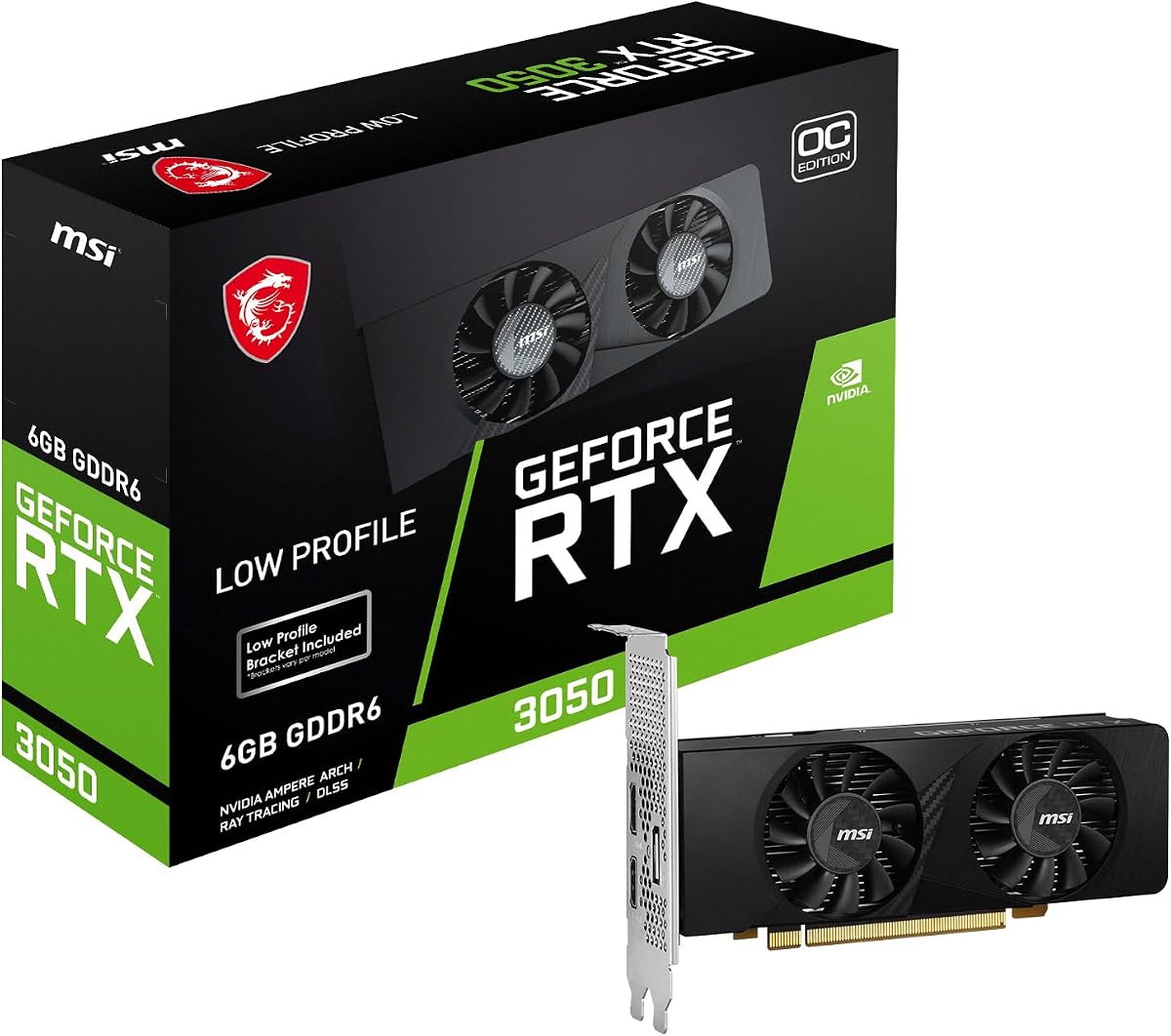
MSI delivers a reliable Ampere option with decent overclocking out of the box. The 1492 MHz boost clock provides a noticeable edge over stock reference cards. It balances gaming performance with the constraints of low-profile systems.
We may earn a commission when you buy through this link, at no additional cost to you.
The dual HDMI 2.1a outputs allow for versatile multi-monitor setups. This is particularly useful for productivity tasks alongside gaming in compact spaces. The build quality ensures durability even in confined thermal environments.
Power requirements are modest but still need a dedicated connector. Ensure your PSU has the necessary cable before installation. This small detail is often overlooked in SFF builds.
A great choice for gamers needing more than integrated graphics in a small PC. The MSI software suite adds value for tweaking settings easily. It is a reliable workhorse for entry-level SFF gaming rigs.
MSI engineering keeps temperatures manageable despite the compact heatsink. The optimized trace routing ensures consistent power delivery to the GPU.
MSI Center allows real-time monitoring of clock speeds and temperatures. This helps users maintain optimal performance during demanding sessions.
We may earn a commission when you buy through this link, at no additional cost to you.
This card is designed specifically for professional workflows in space-constrained environments. It handles CAD software and 3D modeling with certified driver stability. The single-slot profile leaves maximum room for other expansion cards.
We may earn a commission when you buy through this link, at no additional cost to you.
Four Mini DisplayPort outputs allow for a multi-monitor dashboard setup easily. This is ideal for trading stations or video editing bays requiring multiple screens. The 50W power consumption means it runs cool without active cooling stress.
It is not optimized for modern gaming but excels at compute tasks. Users needing workstation reliability will appreciate the certified performance. The low power usage reduces heat in small cases significantly.
Best for business environments requiring reliability and multi-monitor capabilities. It bridges the gap between integrated graphics and high-end workstations. A solid investment for compact professional desktops.
PNY ensures certified drivers for professional applications. This minimizes crashes during critical rendering or modeling tasks.
Mini DisplayPorts support high-resolution 5K displays. You will likely need adapters for standard HDMI or DP connections.
We may earn a commission when you buy through this link, at no additional cost to you.
MSI offers another strong contender with a focus on cooling efficiency. The dual fans and huge heatsink ensure a quiet experience. This design choice prioritizes thermal comfort in tight spaces.
We may earn a commission when you buy through this link, at no additional cost to you.
The hardened circuits optimize routing for maximum stability. You get consistent performance without the risk of voltage drops. This makes it a reliable option for daily driving.
While not the absolute thinnest card the cooling is superior. It fits most standard low-profile chassis with room to spare. The extra width helps dissipate heat more effectively.
Ideal for users valuing silence and stability over raw clock speeds. It provides a balanced mix of features for general gaming tasks. A dependable choice for quiet SFF office PCs.
The dual fan setup spins slower to move the same amount of air. This reduces noise levels significantly during moderate usage.
Hardened circuits prevent electrical interference from external sources. This ensures consistent signal quality for display output.
We may earn a commission when you buy through this link, at no additional cost to you.
This card brings Blackwell architecture to mid-range small form factor builds. The 8GB GDDR7 memory handles texture streaming effectively. It offers significant performance over previous generations in compact sizes.
We may earn a commission when you buy through this link, at no additional cost to you.
TORX Fan 5.0 stabilizes airflow using linked arcs. This design maximizes pressure to cool the GPU even in restricted cases. The cooling system is tailored for dense SFF environments.
Power draw is higher than entry models so check your supply. The performance boost justifies the slightly larger physical footprint. It is a capable card for 1440p gaming in small cases.
Recommended for users needing serious power without a full tower. It balances modern features with a manageable physical size. An excellent step up from entry-level 1080p solutions.
GDDR7 memory offers significantly higher bandwidth for data processing. This reduces bottlenecks during high-fidelity rendering tasks.
TORX Fan 5.0 maintains high pressure airflow through the fins. This prevents heat buildup during long gaming sessions.
We may earn a commission when you buy through this link, at no additional cost to you.
The WX 4100 is a classic choice for low-power professional setups. Its ZeroCore Power technology ensures efficient idle states. This makes it perfect for always-on kiosks or media terminals.
We may earn a commission when you buy through this link, at no additional cost to you.
It supports up to four 4K displays easily. This is a massive benefit for financial trading or monitoring stations. The hardware is built to run 24/7 without issues.
Gaming capabilities are minimal compared to modern cards. It serves well for productivity or video playback only. The 50W draw keeps cooling requirements extremely low.
Best for specialized business environments needing multi-monitor stability. It is not for gaming but excels at display management tasks. A reliable workhorse for compact office desktops.
ZeroCore Power turns off parts of the GPU when idle. This reduces heat and energy usage significantly over time.
Four display outputs allow for extensive screen real estate. This is ideal for multi-tasking workflows in limited desk space.
We may earn a commission when you buy through this link, at no additional cost to you.
This card offers a massive 16GB VRAM pool for heavy texture workloads. It is designed for users who need capacity for 3D modeling or high-res gaming. The 0dB technology ensures silence when not under full load.
We may earn a commission when you buy through this link, at no additional cost to you.
Dual BIOS switch lets you toggle between performance and quiet modes. This flexibility is rare and adds significant value for enthusiasts. The bearing design lasts twice as long as standard sleeve bearings.
It is larger than ultra-slim cards so case clearance is key. You need a chassis that can accommodate the 2.5-slot design. However, the cooling is excellent for sustained performance.
Recommended for power users needing extra VRAM in a compact build. It balances high capacity with decent cooling for small cases. A solid choice for high-end mini-ITX gaming systems.
16GB VRAM handles massive textures without swapping. This prevents stuttering in open-world games and 3D scenes.
Ball fan bearings reduce friction and extend lifespan significantly. This ensures long-term reliability for daily heavy use.
We may earn a commission when you buy through this link, at no additional cost to you.
Choosing the right GPU for a small form factor system involves balancing performance with strict physical limits. This guide outlines key factors to ensure your build fits and performs well.
Always measure your case length and slot width before buying. Cards like single-slot models fit tighter spaces while 2.5-slot designs offer better cooling. Verify the GPU height relative to CPU coolers.
Check slot count and length requirements to ensure fit.
Small cases have limited airflow so efficiency matters. Look for cards with low wattage to avoid overheating. Many low-profile cards are designed for 75W direct slot power.
Ensure your PSU supports the GPU's power draw.
Passive or low-profile active cooling is common in these cards. Axial-tech fans improve pressure in small enclosures. A good cooling solution prevents throttling during long gaming sessions.
Prioritize thermal design to maintain performance.
Modern games need at least 6GB VRAM for smooth play. Professionals might require 8GB or 12GB for rendering. Ensure the memory type like GDDR6 supports current bandwidth standards.
Select VRAM based on your specific workload needs.
Verify that the card supports your monitor inputs. HDMI 2.1 allows high refresh rates while DisplayPort 2.0 supports 8K. Low-profile cards sometimes use Mini DisplayPorts.
Confirm adapter availability for specific outputs.
Newer architectures like Blackwell offer better performance per watt. Efficient chips run cooler which is vital for small cases. Look for DLSS support to boost frame rates without extra power.
Choose modern architectures for long-term relevance.
Most low-profile cards are single or dual slot wide. Ensure your case has room for the width. Thick 2.5-slot cards might clash with other components.
Measure slot spacing in your specific case.
Professional cards often come with longer warranties. Enthusiast brands offer reliable support. A good warranty protects your investment in compact hardware.
Check warranty terms for your region.
Install the GPU carefully to avoid bending connectors. Ensure the card clicks firmly into the PCIe slot. Use screw mounts to prevent sagging in small cases.
Monitor temperatures regularly using software tools. SFF cases trap heat so keep intake fans clean. Dust buildup can severely impact cooling performance.
Update drivers to maintain stability. Use manufacturer software to tune fan curves. Keeping the system clean and cool extends its lifespan.
Most SFF cases support single-slot or dual-slot Low Profile cards under 170mm. Always check your case manual for maximum length and slot count. Some cases allow 2.5-slot cards with specific cooling.
Not necessarily. Modern chips throttle less than older models. Low-profile cards are optimized for efficient airflow. They can sustain high clocks in tight spaces.
Only if it fits the length and width. Standard cards often clash with CPU coolers or drives. Low-profile designs are safer for small chassis.
Some do while others draw 75W from the slot. Check the card specifications before buying. SFF builds often have limited power connectors.
They offer better stability for workloads but lower gaming value. They often have lower power draw which is good for cooling. Choose based on your primary use case.
Use high-speed case fans for intake and exhaust. Dust filters help keep internal temps low. Choose a GPU with a passive or efficient active cooler.
We reviewed ten top GPUs ranging from budget 1080p to high-end professional solutions. Each card balances performance with strict physical constraints. The ASUS SFF-Ready Prime offers top-tier architecture while ASRock provides great value.
Prioritize physical dimensions and cooling over raw specs. A card that fits and stays cool is better than a faster one that throttles. Ensure your power supply and case can support your choice.
Prices change daily so check current listings before purchasing. Verify compatibility with your specific case model. These options ensure you can build a powerful system in a small footprint.