
SUNLU High Toughness Resin
4.7Editor score
Low viscosity for fast curing
Minimal shrinkage for accuracy
High toughness for structural parts
Discover the top 10 flexible resin for 3D printing options evaluated for toughness, elasticity, and print quality to help you choose the right material today.
Flexible resin for 3D printing transforms rigid prototypes into durable, shock-absorbing parts that mimic rubber or TPU. Choosing the right formulation ensures your prints withstand stress without cracking or deforming under pressure.
We evaluated ten leading flexible resins based on shore hardness, elongation at break, print speed, and resistance to environmental factors. Our analysis covers performance across various LCD and DLP printers to ensure broad compatibility.
Each pick highlights specific strengths like impact resistance or low odor to guide your selection for functional parts. Please note that product availability and pricing may fluctuate based on market conditions and regional stock levels.
4.7Editor score
4.7Editor score
4.2Editor score
This comparison table outlines the key specifications and strengths of each flexible resin to help you quickly identify the best match for your specific printing needs and printer type.



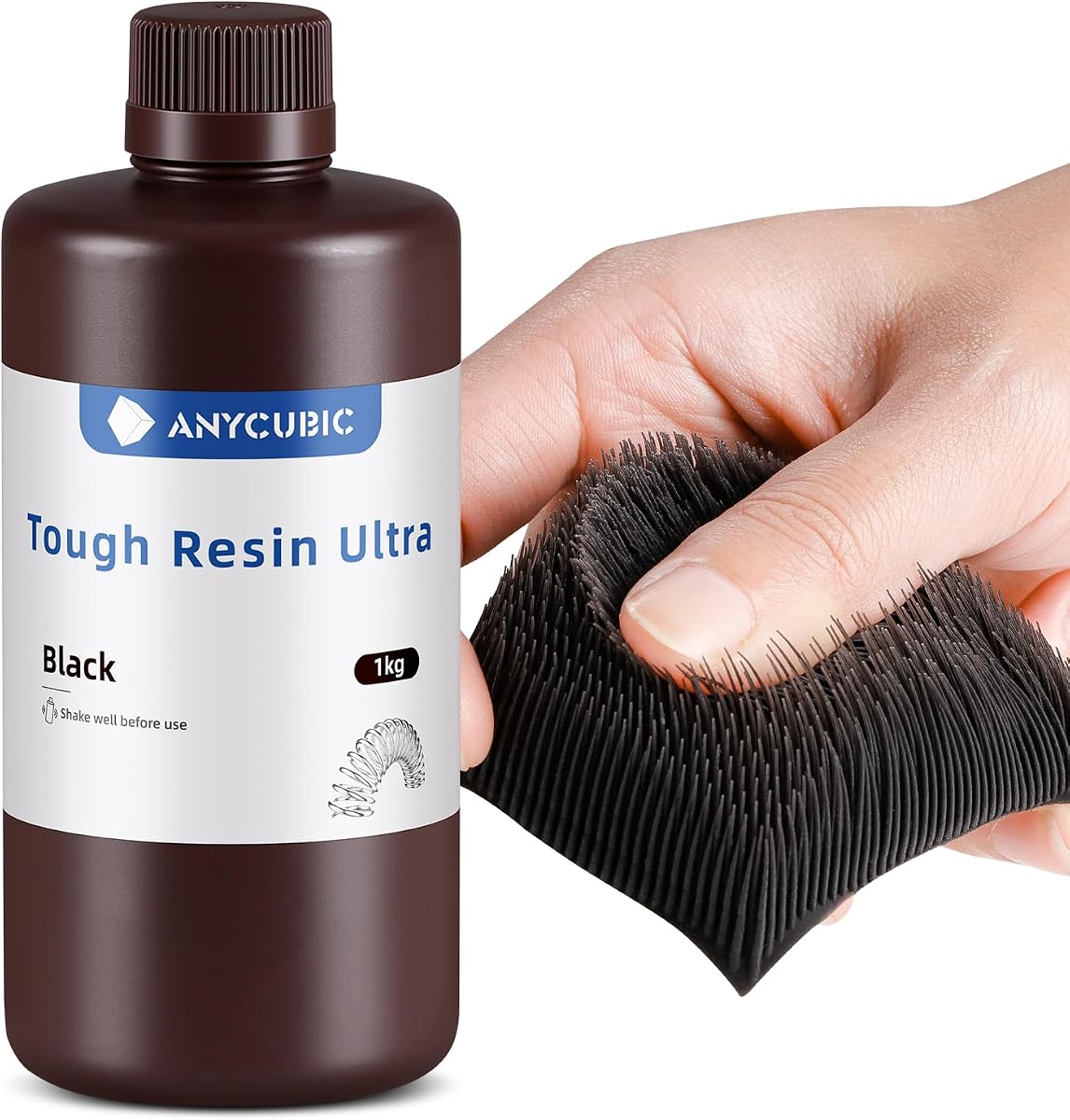
The ANYCUBIC Ultra Tough Resin stands out as a top performer for flexible 3D printing with a strong 4.7 rating. It offers outstanding toughness and flexibility that makes it ideal for parts needing resilience without brittleness.
We may earn a commission when you buy through this link, at no additional cost to you.
Its ability to recover its original shape after deformation ensures high resistance to damage. This resin is perfect for articulated models and hair textures while providing a gentle touch for wearable items like earphone covers.
Users note that it can serve as a valuable additive to enhance other resins though color changes may occur during mixing. The resin resists corrosion and brittleness even in damp environments maintaining high elasticity over time.
This product is recommended for makers needing durable functional parts or wearables. Its versatility as a direct use material or additive makes it a robust choice for various printing applications across different projects.
Models recover from bending quickly which ensures parts stay intact under repeated stress.
The resin creates a non-irritating surface suitable for items worn on the skin.
We may earn a commission when you buy through this link, at no additional cost to you.
SUNLU High Toughness Resin offers exceptional value for makers needing durable flexible parts with a strong 4.7 rating. It provides five times higher elongation than standard resins ensuring unbreakable models for functional use.
We may earn a commission when you buy through this link, at no additional cost to you.
The low viscosity allows for shorter curing times and easier model formation which reduces the risk of distortion. Users praise the accuracy and vivid details achievable with this resin for structural parts.
This formulation maintains low shrinkage during curing to prevent cracking after washing. The low odor makes printing comfortable while ensuring compatibility with most LCD DLP and SLA printers on the market.
Ideal for structural parts or solid models this resin is a top budget choice for durability. It delivers high-quality prints without demanding premium pricing making it accessible for everyday makers.
High elongation ensures parts bend without snapping under stress or vibration.
Low viscosity promotes fast curing and crisp details for efficient production.
We may earn a commission when you buy through this link, at no additional cost to you.
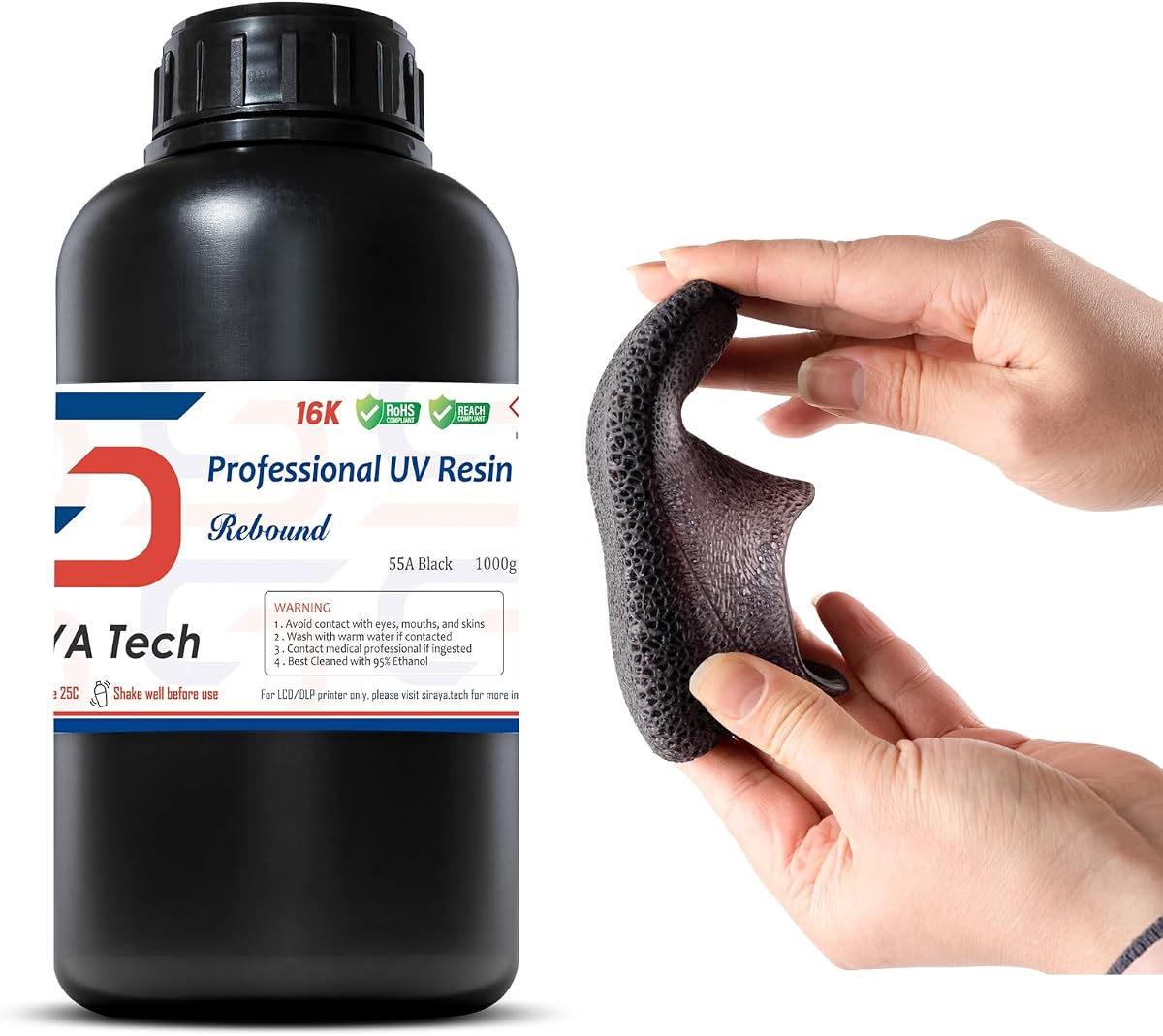
Siraya Tech Rebound 55A delivers fast rebound action and balanced flexibility for prototyping needs with a 4.2 rating. This resin provides excellent shape recovery and impact absorption for shock-absorbing components.
We may earn a commission when you buy through this link, at no additional cost to you.
It is easier to use as it prints on standard LCD DLP printers without requiring complex A/B mixing. The resin cleans easily with standard isopropyl alcohol methods to simplify post-processing workflows.
While long-term performance is being tested early results show resilience during compression cycles. It offers a softer feel than Tenacious Flex while maintaining structural integrity for gaskets and seals.
This option is best for engineers needing high-elasticity prototypes with reliable rebound. The ease of use and standard cleaning make it a premium choice for functional testing models.
Fast rebound ensures components return to form quickly after impact or compression.
No special cleaning means you can use existing tools and solvents easily.
We may earn a commission when you buy through this link, at no additional cost to you.
Superflex 3D Printer Resin offers fast printing speeds and balanced softness with a 4.4 rating. It is designed to enhance productivity with 50um layers printing in just 1.7 seconds on monochrome LCD printers.
We may earn a commission when you buy through this link, at no additional cost to you.
This resin mimics rubber or TPU hardness with 80A shore durometer and 100% elongation at break. The balance of strength and flexibility makes it suitable for cushioning and shock absorption prototypes.
When properly cleaned and cured it passes ISO 10993-5 tests for safety which is beneficial for medical uses. Users report significant time savings and reduced electricity bills due to faster cycle times.
This product is ideal for printing farms needing high throughput and biocompatible results. Its clear form factor allows for versatile applications where visual inspection of the print is required.
Printing layers in 1.7 seconds boosts overall farm productivity significantly.
ISO certification ensures the resin meets safety standards for human contact.
We may earn a commission when you buy through this link, at no additional cost to you.
Siraya Tech Tenacious Flexible provides rubber-like softness and enhanced elasticity for dynamic prints with a 4.7 rating. It offers faster rebound than the classic version making it ideal for resilient 3D prints.
We may earn a commission when you buy through this link, at no additional cost to you.
The material withstands extreme bending and compression while returning to its original shape quickly. This makes it perfect for gaskets shock-absorbing components and pliable prototypes that need durability.
Users can also mix this with other resins to boost impact resistance and flexibility significantly. A small addition can improve the properties of existing tough resins for better performance in parts.
This resin is best suited for projects needing high flexibility like soft grips and gaskets. Its ability to enhance other formulations makes it a versatile addition to any maker's resin collection.
Superior elasticity allows for more dynamic flexible parts without cracking.
Mixing with other resins improves toughness and flexibility of final prints.
We may earn a commission when you buy through this link, at no additional cost to you.
ANYCUBIC Tough Resin 2.0 delivers upgraded toughness and precision for delicate models with a 4.6 rating. It resists peeling cracking and stress marks to ensure less breakage even when dropped from heights.
We may earn a commission when you buy through this link, at no additional cost to you.
The low-odor formulation creates a comfortable environment by reducing volatile organic compounds significantly. Users appreciate the high precision and minimal shrinkage that lead to smooth surfaces and clear details.
It maintains strong flexibility and strength to withstand vibrations without deformation. This makes it suitable for industrial parts building models and high-strength production needs in various settings.
This resin is ideal for makers needing precision parts that require durability without brittleness. Its environmental-friendly formulation ensures safer printing while maintaining high-quality results.
Low shrinkage ensures prints match original designs with crisp clear details.
Reduced VOCs create a safer and more comfortable workspace for users.
We may earn a commission when you buy through this link, at no additional cost to you.
SUNLU Flexible 3D Printer Resin provides a balance of softness and strength for durable models with a 3.5 rating. It offers 70A hardness and 135% elongation to ensure parts bend without breaking under stress.
We may earn a commission when you buy through this link, at no additional cost to you.
The resin provides a high-resolution smooth finish that becomes dry and non-sticky after cleaning. Users value its high compatibility with 99% of printers and leak-proof design that protects during shipping.
While it has minimal odor compared to some options it is made of safe materials for general use. The low shrinkage ensures accurate size and shape which is crucial for functional parts needing tight fits.
This resin is suitable for manufacturing most printing needs requiring flexibility and durability. The leak-proof bottle and wide compatibility make it a reliable choice for general flexible printing projects.
High resolution printing results in smooth pleasant touch surfaces.
Fits most LCD DLP and SLA printers ensuring broad utility.
We may earn a commission when you buy through this link, at no additional cost to you.
ELEGOO Tough 3D Printer Resin offers high strength and resilience for functional models with a 4.5 rating. It withstands tension and stress recovering quickly after deformation with strong damage resistance.
We may earn a commission when you buy through this link, at no additional cost to you.
With a Shore hardness of 84.7D it is harder than some flexible options but still allows for easy bending. The fine texture ensures resistance to brittleness and corrosion even in humid environments.
This resin is great for structural parts tools and jigs where high performance is critical. It handles drilling without cracks and provides low odor which makes printing comfortable and safe.
Ideal for end-use products and engineering prototypes this resin combines durability with flexibility. It is suited for makers needing reliable parts for tools and fixtures in various workshops.
Withstands impacts and stress without fracturing under heavy use.
Resists softening or corrosion in humidity for outdoor or tough conditions.
We may earn a commission when you buy through this link, at no additional cost to you.
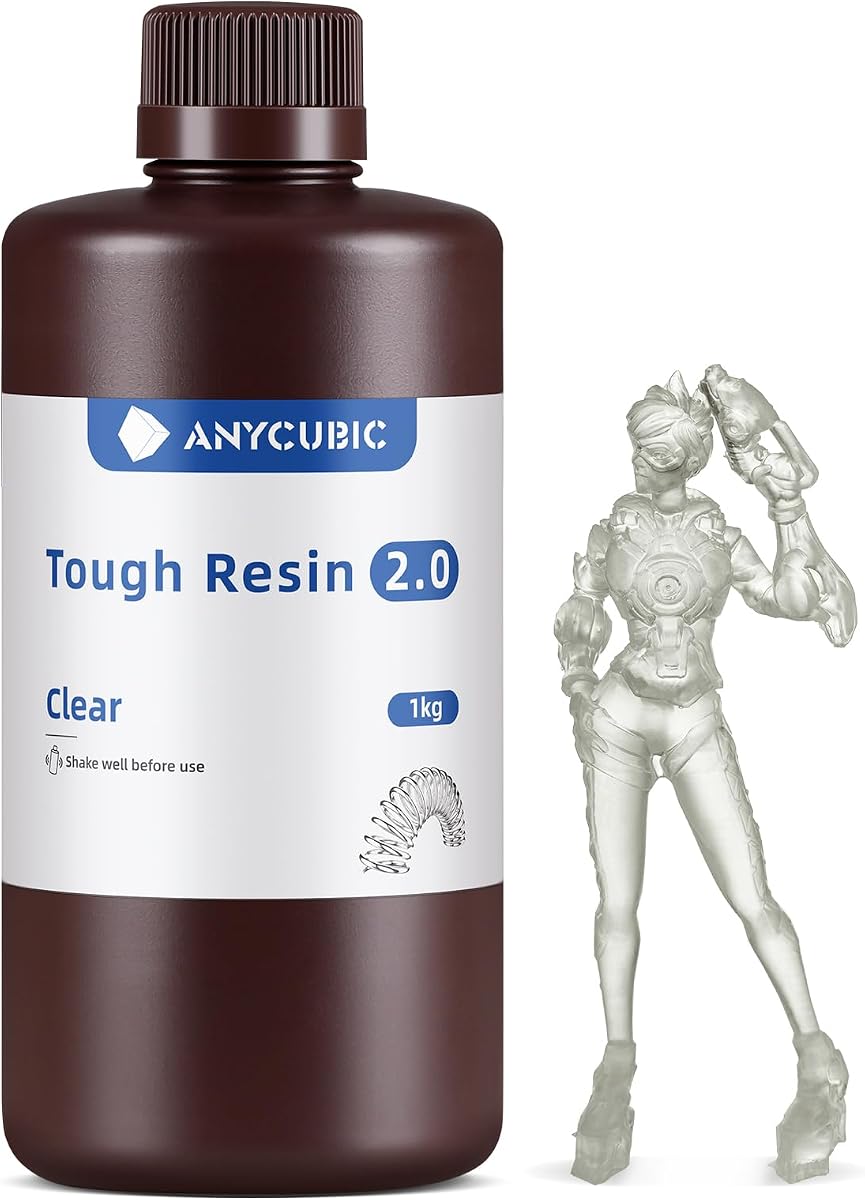
ANYCUBIC Tough Resin 2.0 Clear provides high hardness and precision for delicate parts with a 4.6 rating. It offers unmatched strength and exceptional stretch to reduce breakage likelihood during printing thin models.
We may earn a commission when you buy through this link, at no additional cost to you.
The clear finish allows for detailed models where transparency is essential for design work. Users praise the minimal odor and environmentally friendly design that reduces volatile organic compounds significantly.
It ensures high precision prints with minimal shrinkage which is vital for industrial applications. This clear variant is designed for compatibility with various equipment including 16K LCD DLP printers.
Ideal for clear prototypes and industry applications this resin balances strength with flexibility. Its precision and low shrinkage make it perfect for detailed functional parts needing transparency.
Clear resin allows visual inspection and precise detail for transparent parts.
Minimal shrinkage ensures dimensions match models exactly for tight fits.
We may earn a commission when you buy through this link, at no additional cost to you.
Flexible & Upgraded Tough Resin offers rubber-like softness and strength for real-world use with a 4.4 rating. It provides 90A Shore hardness and tear resistance for products that need to bend without breaking.
We may earn a commission when you buy through this link, at no additional cost to you.
The formula is designed for gaskets protective cases and ergonomic grips that face repeated stress. Users appreciate the low-odor formula which allows for comfortable technical printing in workshops.
It delivers crisp accurate prints without sacrificing detail for flexibility making it great for functional prototypes. This resin is built for makers needing reliable performance for cosplay or end-use parts.
Best for makers needing durability and flexibility this resin handles repeated stress well. Its strong tear resistance and precision make it a top choice for protective cases and toys.
High tear strength ensures parts stay intact under repeated bending.
Comfortable formula allows safer printing in enclosed or ventilated spaces.
We may earn a commission when you buy through this link, at no additional cost to you.
Selecting the right flexible resin requires understanding key factors like shore hardness and compatibility with your printer. This guide outlines critical considerations to ensure your printed parts meet performance needs.
Shore hardness determines how soft or hard your print will feel. Lower values like 55A are softer like rubber while higher values like 90A offer more structural integrity.
Choose a shore hardness based on whether you need cushioning or firm support for your parts.
Elongation measures how much a print can stretch before breaking. High elongation ensures your parts can flex without snapping under stress.
Look for resins with 100% or more elongation for high-flexibility applications.
Most flexible resins work with LCD DLP and SLA printers using 405nm light. Always check the resin wavelength matches your printer's light source.
Ensure your printer supports the required curing speed and layer thickness for optimal results.
Some flexible resins need special cleaning or curing to avoid stickiness. Others clean easily with standard isopropyl alcohol.
Select resins with easy post-processing if you want to save time on finishing.
Impact resistance ensures your parts survive drops or shocks without cracking. Look for terms like tough or resilient in product descriptions.
Prioritize high impact resistance for functional parts that face physical stress.
Flexible resins can release volatile organic compounds during curing. Low-odor options create a more comfortable printing environment.
Check for safety certifications like ISO 10993-5 if using parts near skin or medical applications.
Shrinkage affects the accuracy of your printed parts. Low shrinkage ensures dimensions match your CAD model.
Opt for resins with minimal shrinkage to avoid fit issues in assembled parts.
Prices vary by volume and brand. Larger containers may offer better value but check shelf life.
Compare costs per gram to get the best deal for your printing frequency.
Always shake the bottle before printing to ensure the resin is properly mixed. Stir gently to avoid introducing bubbles that can ruin print layers.
Print using recommended layer heights and UV exposure times for your printer model. Adjust exposure slightly if prints appear too soft or brittle.
Wash prints with isopropyl alcohol and cure under UV light to finalize strength. Store remaining resin in a cool dark place to prevent premature hardening.
Flexible resin is formulated to bend and absorb impact rather than shatter. It contains softer photopolymers that allow parts to recover shape after deformation. Standard resin is rigid and brittle making it unsuitable for moving or shock-absorbing parts.
Most flexible resins clean with standard isopropyl alcohol. Some may take longer to dry fully due to their softer surface. Follow manufacturer instructions to ensure parts are not sticky after washing.
Typically flexible resin lasts about 12 months when stored properly. Keep it away from light and heat to prevent premature curing. Stir occasionally to ensure the ingredients remain mixed.
Yes mixing flexible resin with standard can add toughness without full flexibility. Start with small percentages like 10% to avoid curing issues. Test prints first to ensure compatibility with your printer settings.
Sticky prints usually result from under-curing or insufficient washing. Extend your UV curing time to ensure the resin hardens fully. Also check your wash cycles to remove all uncured resin.
Only resins with proper certification like ISO 10993-5 are safe for skin contact. Most flexible resins should be handled with gloves until fully cured. Check product safety data for specific recommendations.
The ANYCUBIC Ultra Tough Resin leads our picks with balanced toughness and wearability for diverse projects. SUNLU High Toughness offers the best budget option while Siraya Tech Rebound 55A serves premium needs.
Prioritize shore hardness and elongation based on your part's stress requirements to ensure reliability. Look for low shrinkage and odor to maintain precision and comfort during your printing workflow.
Check current prices and availability before purchasing since values may vary by region. These flexible resins provide durable solutions for functional parts that resist breakage.