
Newport NV-Series
4.6Editor score
Saltwater corrosion resistant
LED battery indicator
Versatile thrust options
Choosing the right electric motor for canoe adds significant value to your outdoor adventures. Whether you navigate calm lakes or tackle river currents, a reliable motor reduces fatigue and expands your range. The best models offer consistent thrust, quiet operation, and durable construction to withstand marine environments.
We evaluated ten top-rated electric trolling motors designed for canoes and small watercraft. Our analysis focused on thrust power, shaft length, battery compatibility, and corrosion resistance. Each product was assessed for ease of installation, control features, and overall value for recreational boaters.
Every pick highlights key strengths and potential limitations to guide your decision. Note that prices and availability fluctuate regularly across retailers. Always verify current specs and warranty terms before purchasing to ensure the motor meets your specific paddling needs.
4.6Editor score

4.7Editor score

4.0Editor score
As an Amazon Associate we earn from qualifying purchases.
The following table provides a side-by-side comparison of all ten electric motors evaluated in this guide. It highlights key specifications like thrust, shaft length, and water compatibility to help you quickly identify the model that fits your canoe setup.


The Minn Kota Endura C2 stands out as a top choice for canoeists seeking reliable freshwater propulsion. With a 4.7 rating, it offers solid thrust and ease of use for anglers navigating calm waters.
We may earn a commission when you buy through this link, at no additional cost to you.
Its telescoping tiller provides comfortable control during long trips, while the composite shaft ensures resilience against wear. The five forward speeds allow precise adjustment for different current conditions.
While it lacks saltwater corrosion resistance, the build quality is robust for freshwater environments. The integrated battery meter adds convenience without requiring extra accessories.
This motor is ideal for casual canoeists prioritizing durability and simplicity. It balances performance with cost effectively, making it a safe pick for most freshwater adventures.
The telescoping tiller adjusts easily for standing or sitting positions, reducing strain on your arms and shoulders during extended use.
Unlike metal shafts, the composite core resists corrosion and warping, ensuring consistent performance season after season in freshwater environments.
We may earn a commission when you buy through this link, at no additional cost to you.
The Newport Kayak Series delivers impressive thrust at a budget-friendly price point. Its saltwater rating and aluminum head make it suitable for coastal canoeing and estuaries.
We may earn a commission when you buy through this link, at no additional cost to you.
With 55 pounds of thrust, it handles moderate winds and currents well. The 24-inch shaft offers variable depth placement for shallow water navigation.
The longer battery cables allow flexible placement for better weight distribution. However, the shorter shaft might limit use in very deep draft scenarios.
This motor suits anglers needing saltwater capability without premium costs. It provides a strong balance of power and affordability for entry-level marine propulsion.
Corrosion-resistant magnesium and zinc hardware ensure the motor withstands salt exposure better than standard freshwater models.
Extra-long cables allow you to position the battery for optimal balance, improving canoe stability while navigating currents.
We may earn a commission when you buy through this link, at no additional cost to you.
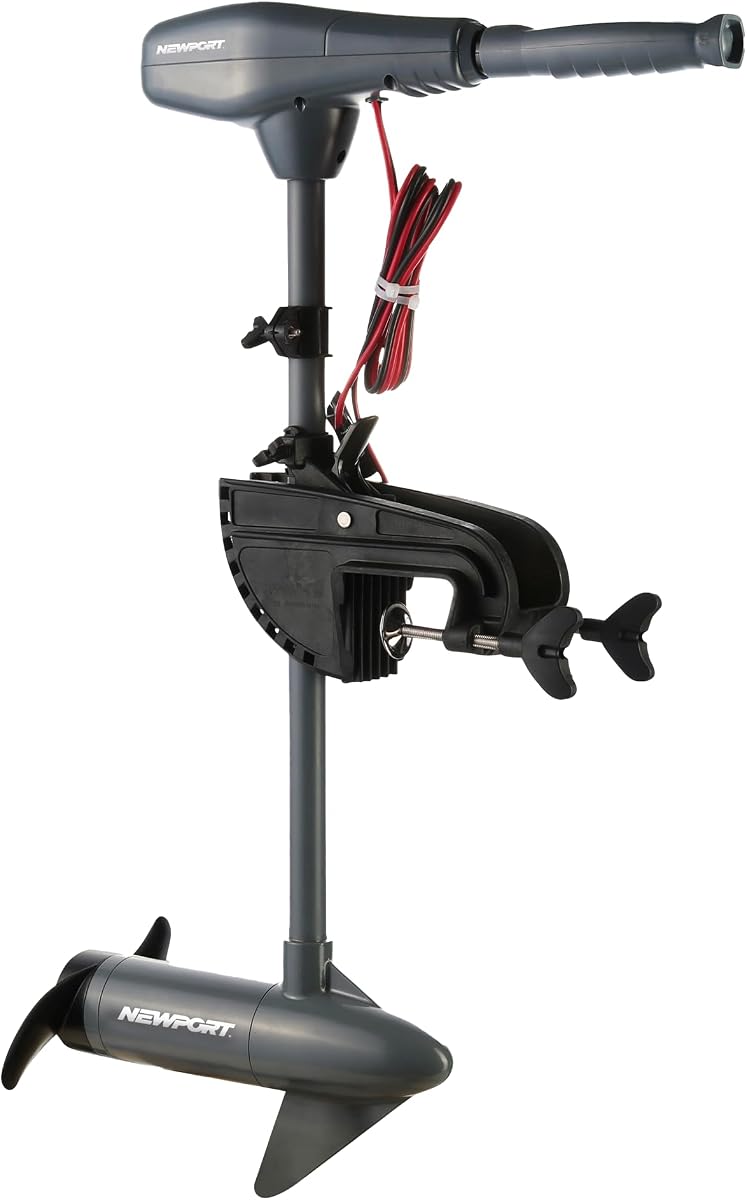
Newport NV-Series offers a balanced blend of power and efficiency for canoeists. The 46-pound thrust rating provides reliable propulsion for small boats and inflatables.
We may earn a commission when you buy through this link, at no additional cost to you.
Saltwater-rated components protect against corrosion, while the three-blade propeller improves thrust in wind. The battery indicator keeps you informed during long trips.
The model is backed by a dedicated US support team for warranty and troubleshooting. This assurance adds value for buyers seeking long-term reliability.
It suits boaters needing more than basic freshwater motors without stepping into premium tiers. A solid mid-range option for those valuing support and durability.
The upgraded three-blade design delivers smoother propulsion and better control in windy conditions compared to two-blade alternatives.
Dedicated US-based support ensures quick assistance for technical issues or parts, enhancing the ownership experience.
We may earn a commission when you buy through this link, at no additional cost to you.
The VEVOR Electric Trolling Motor delivers high thrust for various watercraft types. Its aluminum alloy shaft and saltwater rating make it versatile for mixed environments.
We may earn a commission when you buy through this link, at no additional cost to you.
With 55 pounds of thrust, it powers through vegetation and currents effectively. The adjustable telescopic handle accommodates different seating positions easily.
Build quality may vary compared to established brands, but the cost is competitive. Users report mixed durability experiences over extended periods.
It is a viable option for budget-conscious users needing saltwater capability. Just monitor performance closely if used frequently in harsh conditions.
The handle extends from 6.3 to 10.6 inches, allowing customization for comfort while standing or seated in the canoe.
Fits canoes, fishing boats, and inflatables, making it a flexible choice for multi-purpose watercraft fleets.
We may earn a commission when you buy through this link, at no additional cost to you.
This generic 55lb thrust motor offers quiet operation suitable for fishing. The fiberglass shaft provides strength without significant weight, ideal for portable setups.
We may earn a commission when you buy through this link, at no additional cost to you.
The 30-inch shaft allows depth adjustment for shallow or deep waters. LED indicators help track battery levels to avoid unexpected depletion.
It is designed exclusively for freshwater use to avoid corrosion. While cost-effective, it lacks advanced features like wireless control.
Best for casual paddlers prioritizing silence and low weight. Ensure your canoe setup matches the transom mount requirements before installation.
Minimal noise levels prevent spooking fish, making it ideal for stealthy approaches in calm freshwater environments.
Weighing under 25 pounds, the motor is easy to lift and install without requiring heavy lifting equipment.
We may earn a commission when you buy through this link, at no additional cost to you.
With 68 pounds of thrust, this motor handles heavy loads and currents well. The copper core design supports consistent performance under extended use.
We may earn a commission when you buy through this link, at no additional cost to you.
It includes a low-voltage cutoff to protect battery health during long trips. The debris-resistant propeller minimizes tangles in vegetative waters.
Users report low noise levels around 50dB, which is beneficial for wildlife. However, the weight may affect canoe balance significantly.
Recommended for larger canoes or heavily loaded trips requiring extra power. Verify transom capacity before installation to avoid structural issues.
The low-voltage cutoff prevents over-discharge, extending the lifespan of your deep-cycle battery significantly.
The specialized propeller design reduces debris accumulation, allowing smoother operation in weedy shallow waters.
We may earn a commission when you buy through this link, at no additional cost to you.
The NT300 delivers significant thrust with a 36V system for reliable propulsion. Its digital throttle offers precise control and smooth operation.
We may earn a commission when you buy through this link, at no additional cost to you.
Range capabilities reach up to 66 miles on a single charge, ideal for long expeditions. The trim angles support versatile water navigation.
Installation requires a dedicated external battery not included, raising costs. Setup is more complex than basic trolling motors.
It suits serious boaters needing long range and power. Ensure you budget for the required battery system before purchase.
With up to 66 miles on one charge, you can explore distant waters without frequent recharging stops.
Multiple trim positions allow adjustment for different load conditions, improving stability and efficiency.
We may earn a commission when you buy through this link, at no additional cost to you.
The NK300 features a brushless direct drive motor for quiet propulsion. Operating at 40 decibels, it minimizes disturbance to wildlife.
We may earn a commission when you buy through this link, at no additional cost to you.
Efficiency extends range up to 66 miles, perfect for remote trips. The lightweight design avoids adding excessive weight to your vessel.
Cost is higher than traditional motors, reflecting advanced tech. Mounting requires specific brackets not always standard on all canoes.
It is ideal for anglers prioritizing stealth and long-range exploration. Invest in compatible mounting hardware for optimal performance.
The brushless motor design reduces friction and wear, leading to longer life and quieter operation.
Despite high power, the motor remains small and easy to store when not in use.
We may earn a commission when you buy through this link, at no additional cost to you.
The K-1 is the lightest full-featured motor in its class at just 10 pounds. Its wireless remote offers control from anywhere on the vessel.
We may earn a commission when you buy through this link, at no additional cost to you.
Plug and play adapters allow tool-free installation, adapting quickly to different crafts. The build is waterproof for real-world durability.
Thrust is moderate, suitable for light loads or small canoes. Battery and adapter costs add to the total expense.
Best for portability and quick deployment. Ideal for travelers or solo paddlers needing a lightweight solution.
Over 30 adapter options ensure compatibility with various boats without drilling or permanent modifications.
The Bluetooth remote lets you adjust speeds or stop the motor from any position on the canoe.
We may earn a commission when you buy through this link, at no additional cost to you.
This Angler Pro version offers higher thrust and rugged housing for harsh conditions. It achieves a 4.8 rating for reliability and performance.
We may earn a commission when you buy through this link, at no additional cost to you.
The high-capacity battery supports full-day trips. Universal mounting adapters fit nearly any personal watercraft easily.
It is designed for serious adventurers needing dependable propulsion. The initial investment is substantial but justified by durability.
Ideal for expeditions where reliability is critical. Ensure you have the budget for the complete kit.
Reinforced waterproof construction resists salt, sand, and impact during demanding expeditions.
Extended battery capacity allows for full-day trips without needing frequent recharging stops.
We may earn a commission when you buy through this link, at no additional cost to you.
Selecting the right electric motor for canoe requires understanding thrust needs, battery compatibility, and environmental conditions.
Thrust determines the motor's pushing power. For light canoes in calm water, 30-40 lbs may suffice. For heavy loads or strong currents, consider 50 lbs or higher.
Always choose a thrust rating that exceeds your boat weight and load conditions to maintain control.
Shaft length affects water depth capability. A 30-inch shaft is standard for most canoe transoms and offers flexibility.
Ensure the shaft can submerge the propeller properly without hitting the bottom.
Saltwater demands corrosion-resistant materials like aluminum or sealed components. Freshwater motors may rust quickly if used in salt.
Check product labels to confirm if the model is rated for saltwater use before purchase.
Motors require specific battery voltages like 12V or 36V. Ensure you have compatible deep-cycle batteries available.
Verify the battery amp hour rating matches the motor's runtime requirements for your typical trip.
Look for variable speed controls and tiller adjustability. Some models offer remote controls for easier management.
Choose controls that match your comfort level and paddling style.
Transom mounts are common for canoes. Ensure the motor fits your transom thickness and height.
Install brackets securely to prevent movement during operation.
Lighter motors are easier to transport and install. Consider total weight including battery for transport.
Balance weight with power needs for your canoe setup.
Check warranty periods and support availability. Reputable brands offer better service for marine electronics.
Research customer support reputation before finalizing your purchase decision.
Before departure, inspect the propeller for debris and ensure all screws are tight. Connect the battery securely and verify voltage matches the motor requirements.
During use, avoid sudden high-speed shifts to prevent overheating. Monitor the battery meter regularly and stop to recharge if low power occurs.
After each trip, rinse the motor with fresh water to remove salt or dirt. Store it dry and cool to maintain battery and motor health.
For most small canoes in calm water, 30 to 40 pounds of thrust is sufficient. If you carry heavy gear or face strong currents, 50 pounds or more provides better control and speed.
No, freshwater motors are not corrosion-resistant. Using them in saltwater can lead to rapid rust and motor failure. Choose a saltwater-rated model for marine environments.
Most trolling motors use 12V deep-cycle batteries. For long trips, select a battery with 50 amp-hours or more to ensure adequate runtime without frequent charging.
Yes, most transom-mount motors install without tools. Follow the bracket instructions carefully and ensure the transom can support the motor weight securely.
Battery runtime varies by thrust and usage. At lower speeds, expect up to 30 hours. At full power, runtime may drop to under 10 hours depending on capacity.
These motors work best in calm to moderate conditions. Rough water may overwhelm the propeller thrust. Always check weather forecasts and water conditions before departure.
The Minn Kota Endura C2, Newport NV-Series, and Newport NK300 stand out as top picks for durability, value, and performance respectively.
Prioritize thrust and water compatibility to match your typical paddling environment and load needs effectively.
Prices fluctuate often so verify current listings and warranty terms before finalizing your purchase decision for peace of mind.