
Wireless Digital Microscope, Skybasic 50X-1000X Magnification
4.2Editor score
WiFi and USB Connectivity
Portable Handheld Design
8 Adjustable LED Lights
Exploring the microscopic world of insects requires powerful tools that offer clarity and ease of use. Digital microscopes bridge the gap between traditional optics and modern technology, allowing users to capture images and share findings instantly.
We evaluated ten leading models based on magnification range, display resolution, connectivity options, and overall build quality. Our analysis focuses on how well each device handles insect specimens in various lighting and environmental conditions.
Each pick highlights specific strengths tailored to different needs, from young learners to serious hobbyists. Please note that product availability and pricing may change over time, so always verify current details before purchasing.
4.2Editor score
4.5Editor score

4.3Editor score
As an Amazon Associate we earn from qualifying purchases.
This side-by-side comparison highlights the key specifications and capabilities of the top ten digital microscopes available today for insect observation and study.




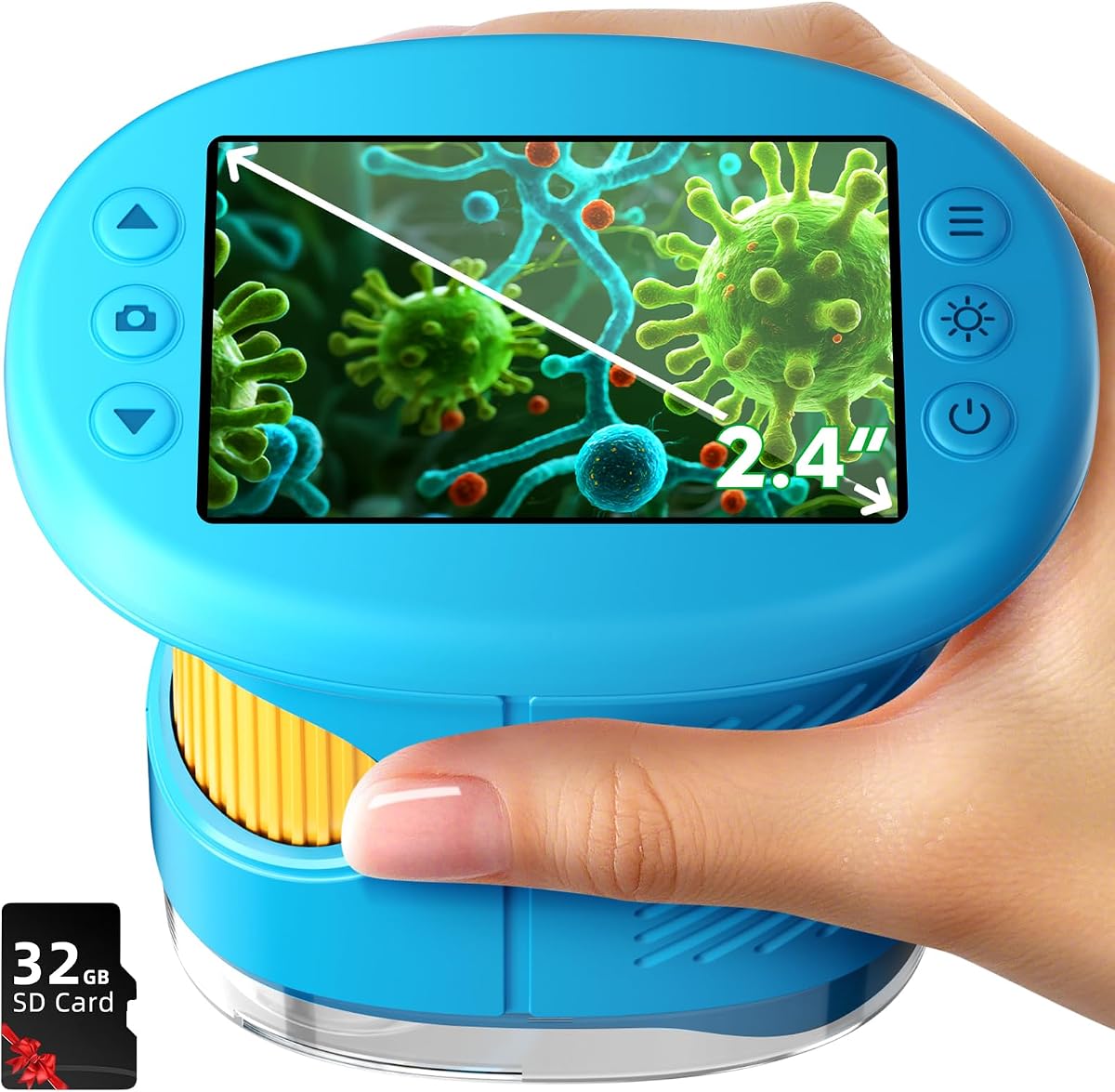
This digital microscope is designed to inspire curiosity among children aged three to twelve. It offers up to 1000x magnification with a built-in 4K HD camera and 2.4-inch display screen for immediate viewing.
We may earn a commission when you buy through this link, at no additional cost to you.
The device features adjustable brightness and eight LED lights ensuring specimens are clearly illuminated in various conditions. Its compact lightweight design makes it ideal for both indoor learning and outdoor exploration.
While the screen is relatively small, the high-resolution camera ensures details remain visible. The included accessories provide everything needed to begin studying insects and plants right away.
Families seeking an engaging educational tool will appreciate its ease of use and durability. It strikes a balance between fun and functionality making it a top choice for young scientists.
Large buttons and intuitive controls allow kids to operate the microscope independently without frustration or technical difficulties.
Prepared slides and storage options enable extended learning sessions helping children document and review their scientific discoveries over time.
We may earn a commission when you buy through this link, at no additional cost to you.
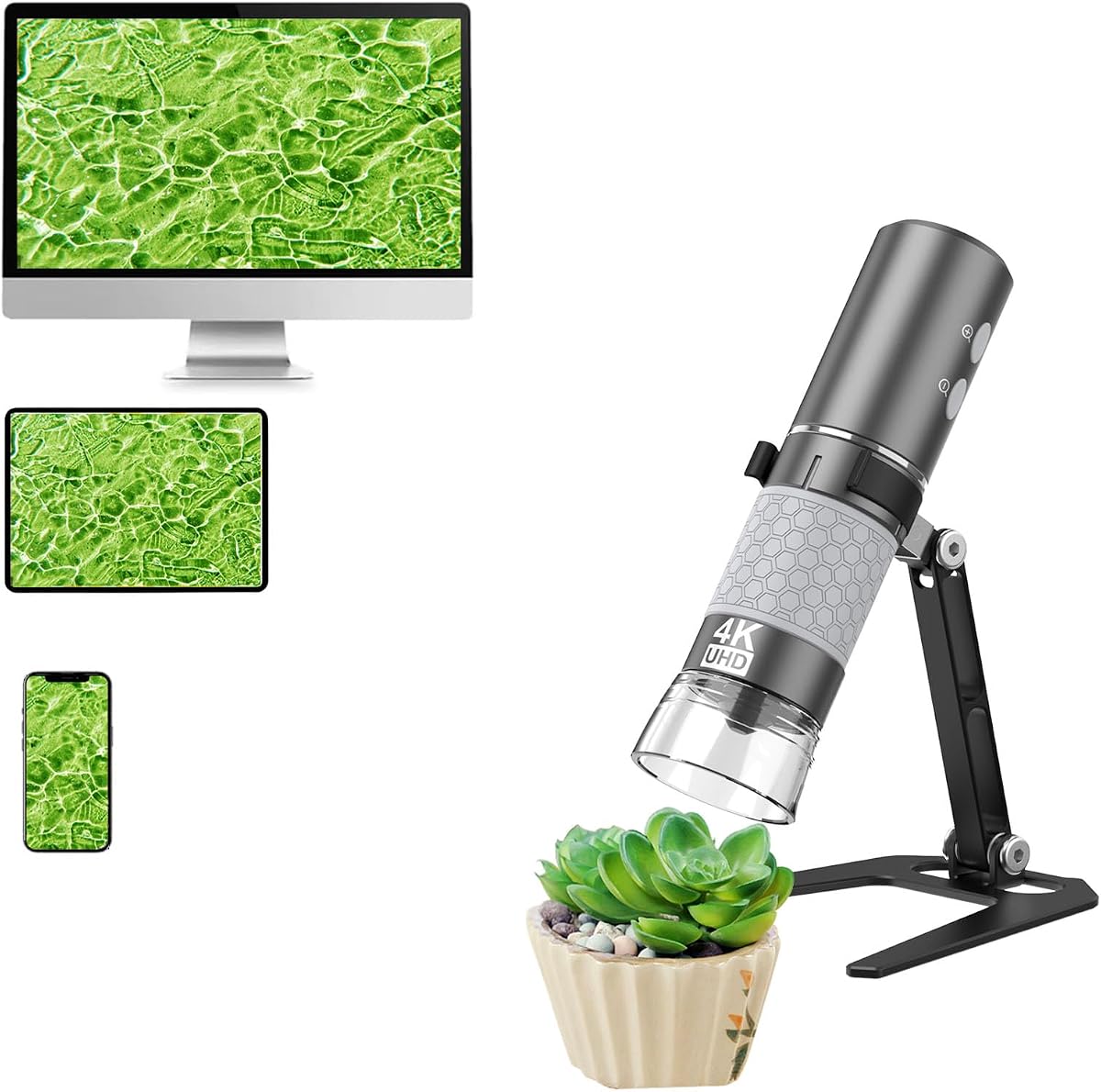
The Skybasic model offers versatile connectivity options allowing users to connect via WiFi to mobile devices or USB to computers. It provides magnification ranging from 50x to 1000x suitable for studying various insect features.
We may earn a commission when you buy through this link, at no additional cost to you.
Eight adjustable LED lights improve visibility while the one-button capture function simplifies recording observations. Its compact size makes it easy to carry during field trips or nature walks.
Although connectivity sometimes requires careful setup steps the device delivers clear images at 1080p on supported phones. Users may need to adjust settings initially but performance stabilizes once connected.
This microscope is an excellent entry-level option for hobbyists and classrooms. Its affordability and flexible viewing options make it accessible for many users interested in digital insect study.
WiFi allows wireless smartphone use while USB provides a stable connection for PC viewing giving users flexibility depending on their device preference.
A single button press takes photos or records videos directly enabling quick documentation without complex menus or software requirements.
We may earn a commission when you buy through this link, at no additional cost to you.
This model is built for serious insect study and offers magnification up to 5000x using a five-lens system. It records ultra-high-definition 2160p video and includes professional measurement software for precise analysis.
We may earn a commission when you buy through this link, at no additional cost to you.
The integrated metal stand minimizes vibration ensuring steady views even at high magnification levels. HDMI output allows connection to larger monitors which enhances group observation in educational settings.
Switching lenses requires some effort but provides flexibility to observe different specimen sizes and details. The included tools and accessories cover most needs for biological and hobbyist applications.
For users needing professional-grade capabilities this microscope delivers accuracy and clarity. Its robust construction and advanced features justify the investment for dedicated researchers or educators.
Up to 5000x zoom reveals minute structures on insect bodies enabling detailed study of anatomical features not visible to the naked eye.
HDMI connectivity enables presentation on external monitors making it ideal for classroom demonstrations or collaborative work among multiple users.
We may earn a commission when you buy through this link, at no additional cost to you.
This microscope features a standout four-hour battery life allowing extended use during field studies without frequent recharging. It supports 4K resolution imaging and connects via WiFi to smartphones or tablets.
We may earn a commission when you buy through this link, at no additional cost to you.
A flexible stand with 180-degree rotation supports stable viewing while the compact build enhances portability. It works across multiple operating systems including iOS Android Windows Mac and Linux.
The 4K output depends on the receiving device screen capability but still provides clear images on most modern phones. Connectivity is generally stable though software updates may be needed for optimal performance.
Users who prioritize battery performance and resolution will find this model appealing. Its adaptability and long use time make it well suited for outdoor insect exploration.
Four hours of continuous power supports full day field trips without interruption enabling extended observation and recording sessions.
Works with iOS Android Mac Windows and Linux systems providing flexibility for users regardless of their preferred device ecosystem.
We may earn a commission when you buy through this link, at no additional cost to you.
This microscope includes three lenses designed for biological slides coin viewing and electronics work. It records 2160p video and features an HDMI output enabling display on larger screens.
We may earn a commission when you buy through this link, at no additional cost to you.
A wireless remote allows convenient operation from a distance which is helpful during demonstrations. The metal boom arm stand ensures stability even with high magnification settings.
Changing lenses involves screws and tools which adds setup time but provides flexibility. The remote control simplifies capturing photos and videos without touching the microscope directly.
Ideal for adults needing versatility this model covers multiple applications beyond insect study. Its sturdy build and clear video output make it reliable for educational and professional use.
Three specialized lenses allow viewing of specimens ranging from whole coins to detailed biological slides offering diverse observation capabilities.
Wireless control enables effortless photo capture video recording and zoom adjustments minimizing disturbance during observation sessions.
We may earn a commission when you buy through this link, at no additional cost to you.
This pocket microscope weighs only 200 grams and features a durable rubber casing designed to withstand drops. It offers 1000x magnification with anti-shake technology helping children obtain clear images easily.
We may earn a commission when you buy through this link, at no additional cost to you.
The 2.0-inch screen provides real-time viewing while the anti-glare diffuser reduces strain. Storage holds over 200 photos and videos allowing children to build digital portfolios of their discoveries.
Battery life supports two hours of continuous use which is suitable for short exploration sessions. Safety certifications ensure materials are non-toxic and safe for children aged three and older.
Portability and durability make this device perfect for young explorers. It simplifies observation and storage supporting independent scientific play and learning.
Exclusive stabilization design keeps subjects steady even during excited movement reducing blurry images caused by small hands.
Made from eco-friendly ABS plastic meeting CE FCC and CPC standards for safe handling by young children.
We may earn a commission when you buy through this link, at no additional cost to you.
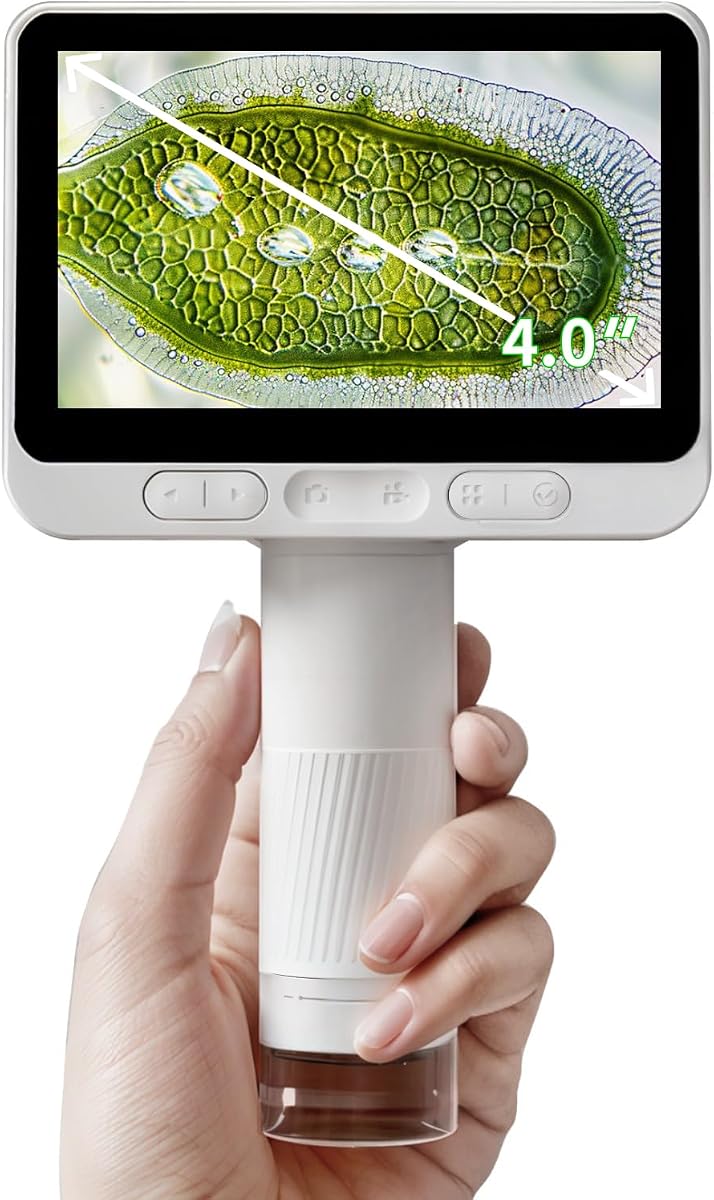
Featuring a 4.0-inch IPS display this microscope offers a larger viewing area than most handheld models. It captures 1080p HD images and videos and supports magnification up to 1600x.
We may earn a commission when you buy through this link, at no additional cost to you.
The built-in hotspot allows easy file sharing to mobile devices while eight adjustable lights ensure specimens are well illuminated. Its compact build makes it suitable for pocket or bag storage.
The larger screen reduces squinting and helps children see details more comfortably. However it may not include physical storage cards requiring users to rely on cloud or external options.
This device excels in screen visibility and ease of sharing results. It is a strong choice for classrooms or families prioritizing visual clarity and social learning.
The 4.0-inch screen offers enhanced viewing comfort allowing children to observe insect patterns more easily than with smaller displays.
Built-in hotspot enables rapid transfer of photos and videos to phones simplifying documentation and sharing discoveries with parents or classmates.
We may earn a commission when you buy through this link, at no additional cost to you.
Built for adventure this microscope features a durable BPA-free ABS casing that withstands rough handling. It offers three hours of battery life and four brightness levels for viewing in varied lighting conditions.
We may earn a commission when you buy through this link, at no additional cost to you.
The anti-glare diffuser ensures comfortable viewing even in bright sunlight. Its lightweight design and included neck strap allow easy carrying during hikes or camping trips.
Storage is internal and does not require an SD card simplifying setup. USB-C charging keeps the device powered for extended field sessions.
This model prioritizes durability and ease of outdoor use. It is ideal for active young explorers needing a reliable tool for nature study.
Durable ABS plastic and rubber casing protect the device during outdoor activities ensuring longevity through rough handling.
Three hours of continuous power supports full exploration trips without interruption allowing sustained field research.
We may earn a commission when you buy through this link, at no additional cost to you.
This microscope features automatic focus technology powered by AI algorithms that continuously refine image clarity. It includes an 8-inch display and supports 4K UHD video for high-resolution imaging.
We may earn a commission when you buy through this link, at no additional cost to you.
A TOF sensor measures distance quickly enabling rapid focus adjustments. The split-screen function allows side-by-side comparison aiding detailed analysis of moving or complex specimens.
While optimized for electronics it can serve insect observation with its large screen and high magnification. The auto-focus minimizes manual effort making it user-friendly for dynamic subjects.
Users seeking advanced features and minimal adjustment will appreciate this device. Its clarity and ease of use justify the cost for serious microscopy tasks.
AI-driven focus adjusts automatically maintaining sharp images even when objects shift reducing blur during observation.
Side-by-side view mode supports comparison of multiple specimens or details enhancing analytical accuracy.
We may earn a commission when you buy through this link, at no additional cost to you.
Claiming to be the first 4K wireless home microscope this model works with iOS Android Windows Mac and Linux systems. It offers 50x to 1000x magnification and includes both wide angle and telephoto viewing modes.
We may earn a commission when you buy through this link, at no additional cost to you.
Users can connect wirelessly for real-time viewing or via USB for PC use. The camera captures 3840x2160p images ensuring high detail on supported displays.
Zoom controls function on mobile devices but not on computer systems requiring reliance on digital zoom software. Performance may vary depending on device screen capabilities.
Its universal compatibility and affordability make it accessible for diverse users. It balances 4K resolution with ease of use offering a practical option for varied environments.
Works across nearly all major operating systems enabling flexibility for users with different mobile or desktop devices.
Wide angle captures entire objects while telephoto allows distant viewing enhancing versatility for different specimen types.
We may earn a commission when you buy through this link, at no additional cost to you.
Selecting the right digital microscope depends on your specific needs and intended use. This guide explains key factors to consider before making a purchase.
Magnification determines how large specimens appear. For insect study ranges from 100x to 1000x are typically sufficient to see details like wings and legs. Higher magnification up to 5000x is available but may require specialized setups.
Choose a range that matches the size of specimens you intend to observe.
Resolution affects clarity and image detail. Look for models supporting 1080p or higher. 4K resolution provides superior sharpness especially when connecting to larger monitors.
Higher resolution ensures fine textures are visible.
Connectivity determines how you view and store images. WiFi allows wireless connection to phones while USB provides stability. Some models include HDMI output for external screens.
Consider which devices you plan to use with the microscope.
Built-in LED lights illuminate specimens and adjust brightness. Eight or more adjustable LEDs are recommended for varied environments. Proper lighting prevents shadows that obscure details.
Ensure the light settings can be adjusted easily.
Weight and durability matter for outdoor use. Lightweight models under 300 grams are ideal for field trips. Rubberized casings protect against drops and impacts.
Choose a build that matches your typical usage environment.
Battery duration affects how long you can use the device without recharging. Models with 3 to 4 hours are best for extended outings. USB charging adds convenience.
Look for sufficient battery life to support your planned activities.
Software enables capturing and analyzing images. Built-in memory allows saving photos without external cards. Some models include measurement tools for scientific study.
Check if the device supports your preferred storage or analysis methods.
Interface simplicity is key especially for children. Look for large buttons intuitive menus and quick focus adjustment. Minimal setup encourages consistent use.
A user-friendly design helps maintain engagement and learning.
Begin by securing the microscope on a stable surface or stand to prevent shaking. Turn it on and connect to your chosen device via WiFi USB or HDMI depending on your model.
Place the insect specimen within the focal range indicated by the manufacturer. Adjust the brightness and focus wheel until the image is sharp. Take photos or videos as needed using the device buttons.
After use clean the lens gently with a soft cloth to remove dust. Store the microscope in a cool dry place. Recharge the battery regularly to maintain performance longevity.
Yes many models are designed with simple controls and durable builds that children can operate safely. Larger buttons and intuitive menus allow young users to focus and capture images without adult help.
Most digital microscopes create a WiFi hotspot that your phone connects to. Download the recommended app then open it to view live images. Alternatively use a USB cable for direct connection.
Built-in LED lights help illuminate specimens in dim environments. Adjust brightness settings to optimize visibility. However extreme darkness may require additional external lighting sources.
Optical magnification uses lenses to enlarge images while digital magnification zooms into the captured image. Optical provides clearer quality so prioritize models with higher optical magnification ratings.
Many models include internal storage that holds photos and videos directly. You can transfer files to a computer via USB or WiFi. Check specifications for available memory capacity.
Several models feature shock-resistant casings designed for fieldwork. Look for lightweight rugged designs and protective cases. Proper handling and storage also extend the device lifespan.
Most devices come with free applications available for iOS Android and Windows. Some advanced models offer professional measurement software. Check compatibility with your operating system before purchase.
Magnification between 200x and 1000x is ideal for viewing insect legs and body segments. Higher levels may be necessary for microscopic details but require stable mounting to reduce blur.
This guide has highlighted ten excellent digital microscopes tailored to various needs from young learners to advanced researchers. The Odatay model leads as the best overall for children while the Skybasic offers great value for budget-conscious buyers.
Consider factors like magnification display quality battery life and connectivity when selecting a device. Each model offers unique strengths that suit different settings whether indoors in a classroom or outdoors in the field.
Always check current pricing and availability before purchasing as product details may change. With the right tool you can unlock a deeper understanding of the insect world and inspire curiosity in others.