
Zoom H1 XLR 2-Channel Recorder
4.5Editor score
Two XLR inputs included
32-bit float recording
Compact handheld design
This guide compares the top audio field recorders for film to help creators choose the right device for professional sound capture on any production set.
Capturing high quality audio is essential for professional film production. A good field recorder ensures clear dialogue and ambient sound even in challenging environments.
We compared ten top rated recorders based on features like input count timecode support and recording quality. This list covers devices for everyone from beginners to pros.
Each pick highlights key strengths and ideal use cases. Note that product availability and pricing can change so always check current details before purchasing your gear.
4.5Editor score

4.7Editor score
4.6Editor score
This side-by-side comparison highlights the core specifications and unique strengths of each recorder to help you find the right tool for your specific filmmaking needs.



The Zoom F6 is a top rated field recorder designed for serious filmmakers. It captures pristine audio with minimal noise and handles complex setups with ease.
We may earn a commission when you buy through this link, at no additional cost to you.
Its six XLR inputs allow simultaneous recording of multiple microphones. This is vital for multi mic scenes or capturing ambient sound alongside dialogue.
While it is powerful the interface takes time to learn. However this is acceptable given the flexibility it offers for professional workflows and post production.
Pros looking for a versatile and powerful tool should choose this model. It balances portability with high end features perfectly for location work.
Six inputs mean you can connect boom mics lavs and ambient mics all at once without needing extra gear.
Built-in timecode I/O ensures audio stays perfectly aligned with video clips during editing.
We may earn a commission when you buy through this link, at no additional cost to you.
This compact recorder offers great value for new filmmakers or those needing a portable backup. It delivers professional sound quality at a fraction of the cost.
We may earn a commission when you buy through this link, at no additional cost to you.
Two XLR inputs handle most interviews or small scenes. The waveform display helps you monitor levels quickly so you never miss a take.
It lacks the multi channel capacity of larger units. But for solo projects or quick captures this limitation is often acceptable for the price.
Anyone on a tight budget or needing a reliable second recorder should buy this. It is easy to use and sounds excellent.
Records at 32-bit float so you can adjust levels after recording without clipping even in loud environments.
Small size fits in pockets or bags making it ideal for run-and-gun shooting styles.
We may earn a commission when you buy through this link, at no additional cost to you.
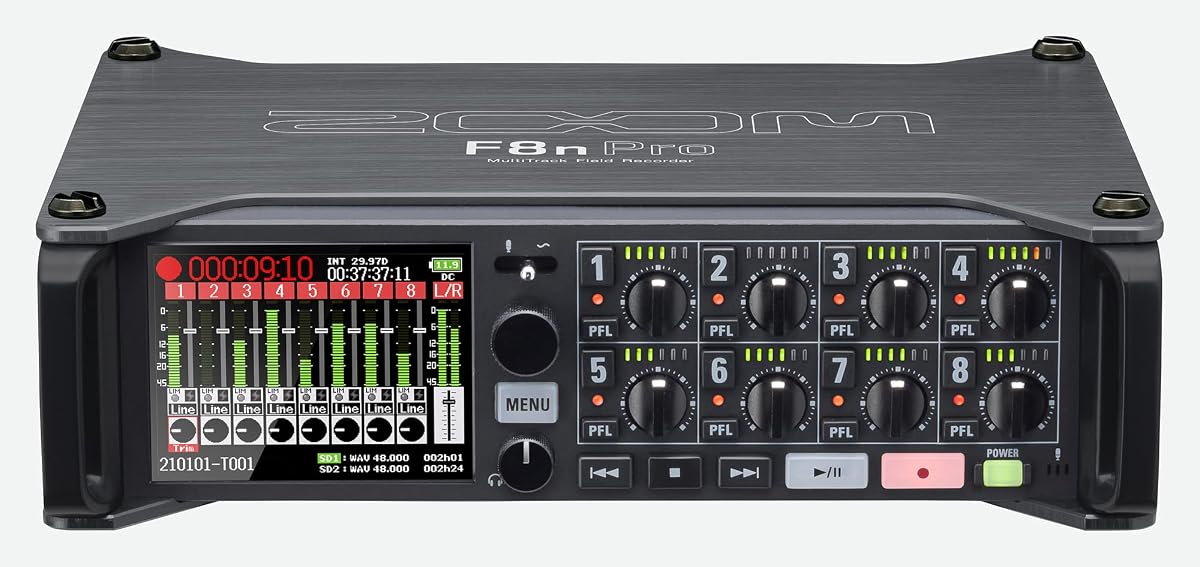
The F8n Pro is a powerhouse for professional sets. It delivers clip free audio across the full dynamic range and supports complex production needs.
We may earn a commission when you buy through this link, at no additional cost to you.
Eight inputs allow for extensive multi mic setups. Dual SD slots provide backup recording so you never lose a critical take due to card failure.
Its size and weight make it less portable than smaller units. This trade off is worth it for the reliability and features in demanding environments.
Production sound mixers need this level of performance. It is the top choice for high budget projects requiring flawless audio capture.
Dual SD card slots record to both simultaneously ensuring a safety net if one card fails.
Industry leading timecode accuracy keeps audio perfectly synced with video for hours without drift.
We may earn a commission when you buy through this link, at no additional cost to you.
This recorder is built for real world recording without second chances. It excels in unpredictable environments with ultra low noise preamps.
We may earn a commission when you buy through this link, at no additional cost to you.
Dual locking XLR inputs keep connections secure even when the device is mounted or part of a complex rig. This prevents accidental disconnects.
The screen is small which can make menu navigation tricky. Yet for focused audio recording this is a minor drawback compared to its reliability.
Filmmakers needing a robust lightweight recorder should choose this. It balances power and portability effectively for field work.
Locking inputs prevent cables from popping out during active shoots or when mounted on rigs.
Multiple power options ensure you keep recording during long days without interruption.
We may earn a commission when you buy through this link, at no additional cost to you.
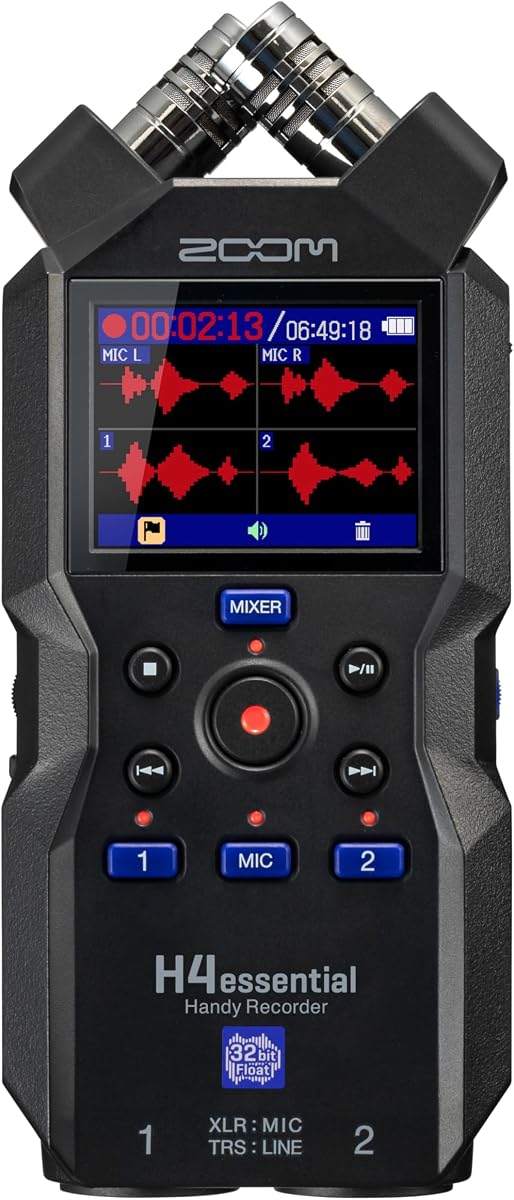
The H4 Essential helps you capture more of the moment with confidence. It handles music interviews and live performances with clear sound.
We may earn a commission when you buy through this link, at no additional cost to you.
It includes two XLR inputs for external gear. This flexibility lets you upgrade your setup as needs grow without buying a new device.
The build is less rugged than pro models. For controlled shoots this is acceptable and the accessible features make it easier to use.
Creators needing a simple versatile device will love this. It is perfect for podcasts and video audio on a budget.
Voice prompts help you navigate menus quickly without squinting at a screen.
Connect to computers for streaming or recording while also saving backups to SD card.
We may earn a commission when you buy through this link, at no additional cost to you.
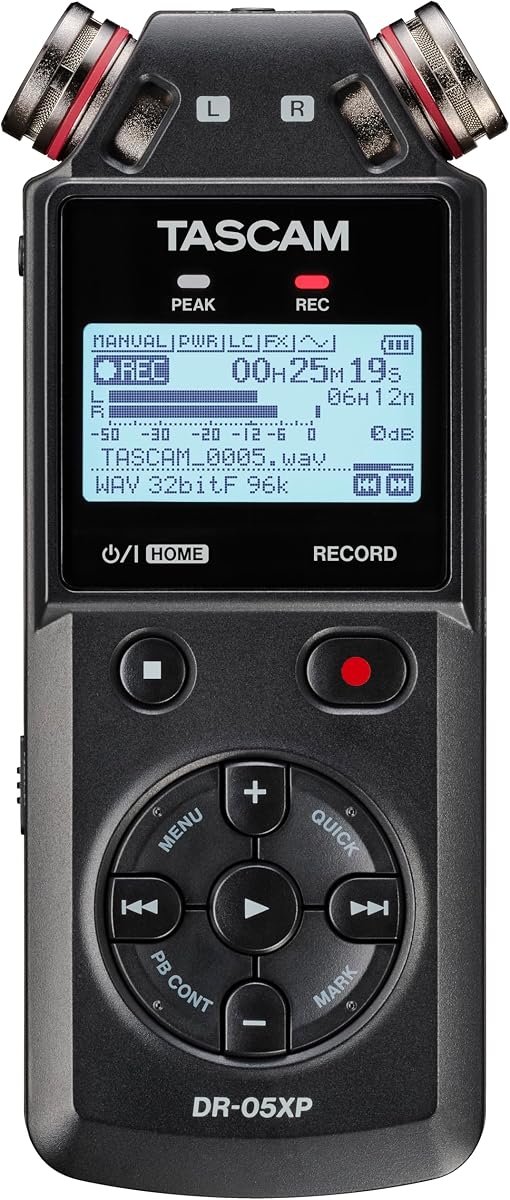
This portable recorder makes capturing pro quality recordings easy for meetings video audio dictation and more. It is ideal for quick sound checks.
We may earn a commission when you buy through this link, at no additional cost to you.
Flexible recording modes include 32-bit float and various sample rates. This ensures compatibility with different project needs without complicated setup.
Lacking external inputs limits flexibility for advanced users. However for casual recording or backups it performs admirably and is easy to carry.
Anyone needing a small reliable tool for quick captures should choose this. It is simple and sounds good for its size.
Built-in mics handle loud environments well without distorting sounds easily.
Runs for hours on standard batteries so you are rarely stuck without power.
We may earn a commission when you buy through this link, at no additional cost to you.
This versatile recorder uses a system of interchangeable input capsules for extreme flexibility. It captures detailed audio for songs videos and interviews.
We may earn a commission when you buy through this link, at no additional cost to you.
Four track simultaneous recording offers great flexibility for small productions. You can record multiple sources and mix them later during post production.
The SD card limit is lower than newer models. For short shoots this is not an issue but long sessions may require card management.
Creative filmmakers who want modular audio gear will appreciate this. It adapts to many scenarios with ease.
Swap input capsules like camera lenses to change mic patterns for different recording needs.
A safety feature protects your recordings so you never lose a take due to level mistakes.
We may earn a commission when you buy through this link, at no additional cost to you.
This personal recorder solution delivers clear audio even in busy settings like receptions or interviews. It comes with a matched lavalier microphone included.
We may earn a commission when you buy through this link, at no additional cost to you.
LTC Jam Sync enables seamless timecode synchronization for multi-device setups. This is crucial for professional post production workflows in filmmaking.
Its small size limits battery life and input options. For personal audio recording this is usually acceptable and the quality is high.
Vloggers and interviewers needing reliable personal sound should use this. It offers professional features in a wearable format.
Includes a clip-on lavalier mic matched to the recorder for consistent performance.
Control up to five simultaneous recordings from one device for coordinated shoots.
We may earn a commission when you buy through this link, at no additional cost to you.
Capture clear stereo audio for videos and tutorials with this simple device. It is ready when inspiration hits for songwriting or recording.
We may earn a commission when you buy through this link, at no additional cost to you.
Connect via USB-C to use it as a microphone for livestreams or remote meetings. This adds huge value for creators who need flexible setups.
It lacks external inputs which limits pro flexibility. For basic video audio this is fine and the sound quality is polished.
Beginners or creators making quick content will find this helpful. It improves sound without complexity or high cost.
Start recording sessions or rehearsals instantly without lengthy setup steps.
Use directly as a mic for calls or streams for high quality voice.
We may earn a commission when you buy through this link, at no additional cost to you.
This is the smallest 32-bit float recorder you can wear. It captures clip-free audio at any volume without adjusting gain during shoots.
We may earn a commission when you buy through this link, at no additional cost to you.
Includes a lavalier mic with screw-lock connector for secure placement. Runs up to fifteen hours on two AAA batteries for long events.
It is extremely small which can make handling tricky. However for discreet interviews this size is perfect and reliability is high.
Content creators and journalists needing wearable audio should buy this. It offers pro features in a tiny package.
Tiny wearable form factor captures clip-free audio at any volume level without manual gain changes.
Internal clock ensures perfect audio and video sync for professional production workflows.
We may earn a commission when you buy through this link, at no additional cost to you.
Choosing the right field recorder depends on your production needs. This guide breaks down the key factors to help you decide.
The number of inputs determines how many microphones you can connect simultaneously. For interviews two inputs often suffice but multi mic scenes need more.
Choose a recorder with enough inputs for your typical setup to avoid extra gear.
Timecode I/O ensures audio stays perfectly synced with video during post production. Look for devices with built-in timecode or external sync options.
If syncing manually is not an option timecode support is essential for professional results.
32-bit float recording offers huge dynamic range and prevents clipping. This is ideal for unpredictable sound levels on set.
Opt for 32-bit float if you want flexibility in post without losing data.
Size and weight affect how easily you can carry the device in the field. Handheld units are great for run-and-gun while larger models offer more power.
Balance your need for features with the weight you can manage during shoots.
Long shoots require reliable power sources. Check battery capacity and availability of replacement batteries or external power options.
Select a recorder with enough runtime or flexible power to last your entire shoot.
Look for support for SD or microSD cards with high capacity. This ensures you have enough space for long recording sessions.
Prioritize devices with large storage limits or dual slots for backups.
High gain low noise preamps ensure clear audio even with quiet sources. This is vital for dialogue and ambient sound.
Check specs for gain and noise floor to ensure clean recordings.
USB or USB-C connectivity allows for direct transfer and use as an audio interface. This simplifies workflows and backups.
Choose a model with modern connectivity for easier integration with your setup.
Start by connecting microphones securely to the input ports. Use locking cables if available to prevent accidental disconnection during recording.
Set recording levels carefully and monitor audio through headphones before the shoot begins. Check for background noise or interference.
Store the recorder in a protective case when not in use. Keep firmware updated for optimal performance and new features.
32-bit float recording provides an enormous dynamic range that prevents audio clipping. This means you can record loud and quiet sounds simultaneously and adjust levels later without losing quality.
Consider how many microphones you use regularly. Two inputs work for interviews but larger productions need four or more to capture dialogue ambient sound and music together.
Yes timecode sync saves time in post production by keeping audio and video aligned automatically. Manual syncing can be tedious and error prone especially on long shoots.
At least eight to ten hours of continuous recording is recommended. Also check if the device supports external power options like USB charging for extended use.
Most recorders accept standard XLR microphones but verify phantom power and connector types. Some units support both XLR and TRS inputs for versatility.
Use a padded case and avoid extreme temperatures. Keep the device dry and clean ports regularly to prevent dust or moisture damage during outdoor shoots.
These ten options cover a wide range of needs from beginner friendly devices to professional rigs. The Zoom F6 and H1 XLR stand out for value and performance.
Prioritize inputs and recording format based on your projects. Timecode support and battery life are critical for smooth workflows.
Always verify current availability before buying. Equipment evolves quickly and staying updated ensures you get the best tools for your next film.