
LAFVIN R3 Camera Smart Robot Car
4.5Editor score
Affordable Wi Fi streaming
Five smart operation modes
Open source learning platform
Compare the top 10 Arduino robot kits for 2026. We review features, coding options, and build quality to help you choose the best STEM robot kit for your needs.
Arduino robot kits offer an exciting way to learn electronics and coding through hands on projects. These kits provide all the components needed to build a functional robot that can move, sense, and interact with the environment. They are perfect for students, makers, and anyone interested in STEM education.
We compared ten top rated kits based on build quality, coding flexibility, sensor variety, and ease of assembly. Our analysis covers everything from beginner friendly car kits to advanced robotic arms and tanks. Each product was evaluated for its educational value and long term project potential.
Every pick in this list highlights specific strengths like camera integration, tracked mobility, or modular expansion. Keep in mind that prices and availability can change frequently on Amazon. Check the current listings before purchasing to ensure you get the best deal for your project.
4.5Editor score

4.5Editor score

4.3Editor score
This table provides a side by side overview of all ten kits. Compare their key specifications at a glance to find the right fit for your skill level and project goals.


The ELEGOO UNO R3 Smart Robot Car Kit V4 is a top choice for those seeking a comprehensive learning experience. It combines ease of assembly with advanced features like FPV streaming. This makes it an excellent starting point for serious hobbyists.
We may earn a commission when you buy through this link, at no additional cost to you.
This kit stands out due to its built-in camera and Wi-Fi module. Users can view live video from the robot’s perspective via a phone app. The wiring uses keyed connectors that prevent common mistakes during assembly.
While the app setup can take a few minutes, it is manageable. The camera angle is adjustable via servo, but some users prefer more flexibility. Overall, these trade-offs are minor compared to the value offered.
If you want a kit that grows with your skills, this is the one. It supports Arduino IDE for deeper coding projects. We recommend it for ages 8 and up with adult guidance for first builds.
The OV2640 camera and ESP32 module allow real-time video streaming. This feature transforms the robot into a remote controlled vehicle with first-person view capabilities.
Keyed XH2.54 connectors simplify wiring. The included tutorial provides step-by-step instructions to ensure even novices can complete the build successfully.
We may earn a commission when you buy through this link, at no additional cost to you.
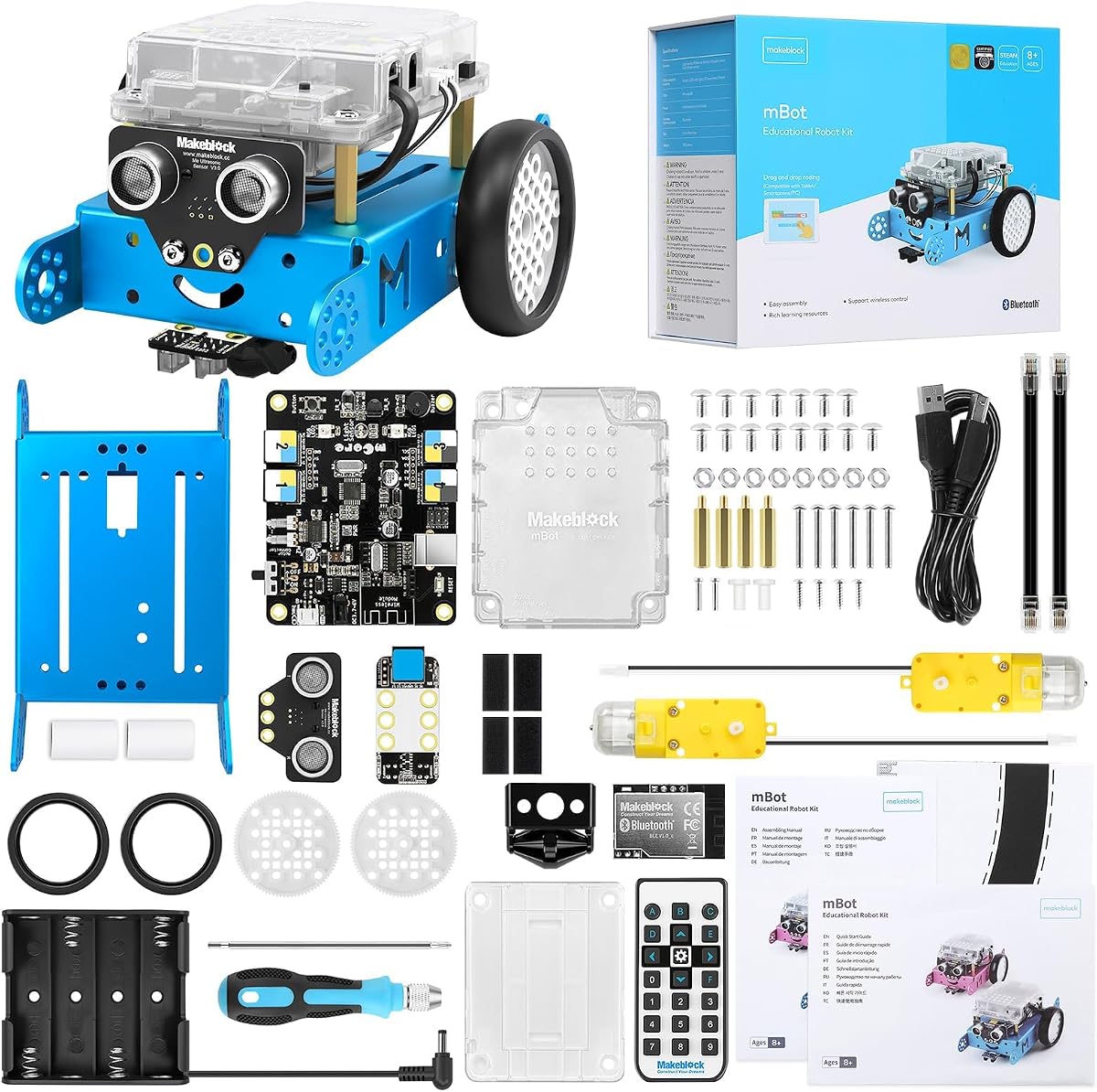
The Makeblock mBot is designed specifically to introduce children to robotics and coding. It uses mBlock software which is based on Scratch, making it very accessible. The build process is quick and rewarding for kids.
We may earn a commission when you buy through this link, at no additional cost to you.
One of its strongest points is the educational ecosystem. It comes with coding cards and lessons that guide kids through different programming concepts. The metal frame ensures durability for school or home use.
Keep in mind that batteries are not included with the kit. You will need to buy AA batteries for the robot and a CR2025 for the remote. This is a minor inconvenience but worth noting before purchase.
We suggest this kit for parents looking for an entry-level STEM toy. It balances play and learning perfectly. If you want your child to learn coding step-by-step, this is a solid choice.
Kids start with drag-and-drop blocks in mBlock. As they progress, they can move to text-based Arduino coding for more complex projects.
mBot is compatible with over 100 electronic modules. This allows for endless creative expansions and keeps the learning fresh over time.
We may earn a commission when you buy through this link, at no additional cost to you.
This tank kit is built for durability and robust performance. The metal tracks and chassis make it ideal for tackling different terrains. It offers more stability than standard wheel kits.
We may earn a commission when you buy through this link, at no additional cost to you.
A key feature is the adjustable servo-mounted camera. You can change the viewing angle while driving, which is great for inspections. The kit also includes tools and a rechargeable battery.
It is slightly larger and pricier than car kits. However, the build quality justifies the cost. If you want a rugged robot for outdoors or heavy use, this fits the bill.
We recommend this for ages 10 and up. It supports block coding initially but allows full Arduino IDE coding later. It is a great step up for those who have tried basic kits.
The stainless-steel tracks provide excellent traction. This allows the robot to climb slopes and navigate uneven surfaces effectively.
Switch between FPV, IR remote, and obstacle avoidance. This variety keeps engagement high as you experiment with different control methods.
We may earn a commission when you buy through this link, at no additional cost to you.
The Tumbller is a unique kit focused on balance and control algorithms. It teaches how real robots maintain stability using sensors and motors. This is a fun way to understand physics through coding.
We may earn a commission when you buy through this link, at no additional cost to you.
It comes with a bounce mode that helps recover if it tips. The kit includes motors, ultrasonic sensors, and an IR remote. You can also control it via a mobile app.
Balancing might require some tuning of sensor thresholds. This is actually part of the learning process. It is a rewarding challenge for those who want to dig deeper into control systems.
We suggest this for users who want to try something beyond driving. It is excellent for STEM lessons on balance. If you are ready for a bit more complexity, this kit delivers.
Real-time motor control keeps the robot upright. This teaches feedback loops and sensor integration in a practical way.
Six ways to play keep it interesting. You can switch between remote control, auto-follow, or obstacle avoidance modes easily.
We may earn a commission when you buy through this link, at no additional cost to you.
This kit stands out for its Mecanum wheels which allow full 360-degree movement. You can move forward, sideways, or rotate without turning. This makes navigation very flexible for complex paths.
We may earn a commission when you buy through this link, at no additional cost to you.
It includes 16 story-rich tutorials to guide you through programming. The ESP32 controller makes it easy to connect to Wi-Fi or expand features. It is suitable for ages 8 to 16.
You will need to provide your own batteries for this kit. The build is simple and straightforward. While it lacks the metal frame of premium kits, it offers great value for the features.
We recommend this for those wanting a versatile robot on a budget. If you need sideways movement for narrow spaces, this is the best option. It is also easy to expand with extra packs.
The Mecanum wheels support diagonal and lateral movement. This allows the robot to reach tight spots that other cars cannot.
Add packs for camera, arm, or tank tracks. This modular design means you can keep upgrading as you learn.
We may earn a commission when you buy through this link, at no additional cost to you.
If you want FPV capabilities without a high cost, this kit is ideal. It includes a camera and Wi-Fi module for remote viewing. The price point makes it accessible for many families.
We may earn a commission when you buy through this link, at no additional cost to you.
Assembly is required which helps build wiring skills. The open-source ecosystem provides free resources and code. This is great for those who want to tweak the system themselves.
The build is less polished than premium kits. However, for the price, it offers excellent functionality. You get real-time video and multiple control modes without spending much.
We suggest this for budget-conscious buyers who still want advanced features. It is a perfect gateway into robotics. If you want to learn wiring and coding on a tight budget, choose this.
Video streaming is rare at this price. You can control and view the robot via mobile devices easily.
Access free tutorials and community projects. This encourages learning by modifying existing code for new behaviors.
We may earn a commission when you buy through this link, at no additional cost to you.
This kit allows you to build four different configurations including a robotic arm. It combines the fun of a tank with precision manipulation. This is great for older teens and adults.
We may earn a commission when you buy through this link, at no additional cost to you.
The robotic arm has 5 degrees of freedom for flexible movement. You can learn to grab and place objects. The kit also includes tank treads for all-terrain mobility.
The assembly is more complex than car kits. Some users found the instructions challenging without videos. But the versatility makes it worth the effort for advanced learners.
We recommend this for those ready for a serious challenge. If you want to learn about mechanical arms and track systems, this covers both. It is a strong option for engineering enthusiasts.
The 5DOF arm allows lifting and gripping. This teaches servo control and kinematics in a practical setting.
Build a car, tank, or arm. The flexibility keeps the project engaging for longer periods.
We may earn a commission when you buy through this link, at no additional cost to you.
This kit is more than a robot. It includes 192 items for 87 projects. It is perfect for those who want to explore IoT and sensors. It supports both Scratch and Arduino IDE.
We may earn a commission when you buy through this link, at no additional cost to you.
It comes with expert-designed video courses. You get guided learning paths for different skills. This helps beginners grow confidence through small steps.
The sheer number of parts can be overwhelming. You might need to organize components carefully. But the breadth of projects ensures you will not run out of ideas.
We suggest this for anyone serious about long-term learning. If you want to go beyond robots into smart home tech, this is the path. It is an investment in education.
Learn to build smart home devices. The kit connects to online tutorials that teach internet-connected projects.
Video courses cover basics to advanced topics. This ensures a clear path from blinking LEDs to complex robots.
We may earn a commission when you buy through this link, at no additional cost to you.
This is the ultimate kit for those who want professional-grade tools. The aluminum alloy parts are sturdy and precise. You can build ten different models from scratch.
We may earn a commission when you buy through this link, at no additional cost to you.
It supports Raspberry Pi for advanced vision projects. You can code in Python or Arduino. This makes it future-proof for serious engineering projects.
The price is high compared to others. But you get industrial quality that lasts years. You also need AA batteries which are not included.
We recommend this for adults or older teens. If you want a platform for advanced robotics competitions, this is the best fit. It turns hobbyists into makers.
Code in Python or Arduino IDE. The MegaPi board handles multiple motors and sensors for complex behaviors.
Aluminum alloy ensures durability. This means the robot can handle rough play without breaking easily.
We may earn a commission when you buy through this link, at no additional cost to you.
If you want a robot that walks like an insect, this is the kit. It has six legs with three motors each. This allows for complex gaits like crawling and twisting.
We may earn a commission when you buy through this link, at no additional cost to you.
The prewritten code library makes control easy. You do not need to start from scratch. Download the tutorial and build to get started quickly.
Assembly requires patience due to the many servos. Also, remember to buy batteries. The app control works well across platforms like iOS and Android.
We recommend this for those fascinated by legged locomotion. It is a great STEM project for biology and mechanics. If you want a different kind of robot, try this.
The hexapod design allows stable walking. This teaches inverse kinematics and balance for walking robots.
Each motor can be controlled independently. This gives you precise control over leg movement and posture.
We may earn a commission when you buy through this link, at no additional cost to you.
Choosing the right robot kit depends on your goals and experience. Consider these factors to find the best match.
Beginners should look for kits with clear instructions and block coding. Advanced users may prefer text-based coding and complex sensors. Match the kit to your current coding knowledge.
Start simple and grow. Kits with Scratch support make it easy to transition to Arduino later.
Decide between wheel kits, tracked tanks, or legged robots. Wheeled kits are common and easy. Tanks are durable. Hexapods are unique but harder to build.
Consider where you will drive the robot. Tracks work on carpet better. Wheels are faster on smooth floors.
Check if the kit supports Scratch, Arduino IDE, or Python. Some offer both. Scratch is great for kids. Arduino offers more control for custom logic.
Ensure the software works on your computer. Some apps are mobile only. Others require desktop IDEs.
Sensors like ultrasonic, IR, and cameras add capabilities. Cameras allow FPV. Ultrasonic sensors help with obstacle avoidance. Line trackers keep robots on course.
Look for kits with modular sensors. This lets you add more later. More sensors mean more project ideas.
Some kits include batteries while others require you to buy them. Rechargeable batteries save money long term. Battery-powered kits need replacements often.
Check battery life and type. USB rechargeable is convenient. Standard AA batteries are easier to replace on the go.
Modular kits let you add arms or cameras later. Open-source kits allow hardware modifications. This keeps the kit useful as you learn.
Choose kits compatible with other systems. LEGO or generic servo mounts allow creativity. This prevents you from outgrowing the kit quickly.
Good tutorials and community support help solve problems. Look for video guides. Forums are helpful for bugs. Official documentation should be clear.
Read reviews to check support quality. Active communities mean quicker answers. This is vital for fixing connection issues.
Kits range from under 50 to over 400. Higher price often means better parts. But basic kits can still teach key concepts.
Set a budget and stick to it. You do not need a premium kit to learn coding. Focus on core features you need.
Start by reading the instructions carefully. Ensure all parts are present before assembly. Follow the wiring guide closely to avoid errors. Take your time with the chassis construction.
Charge the battery fully before first use. Test the motors by running simple code. Adjust sensor thresholds in code to fit your environment. Keep firmware updated for best results.
Clean sensors regularly to prevent interference. Store the kit in a dry place to avoid damage. Use a tool kit for screw adjustments. Keep parts organized for future upgrades.
Many kits support Scratch which uses visual blocks. This makes coding easy for beginners. You can learn as you build. Experience is not required to start.
The ELEGOO UNO R3 Smart Robot Car Kit V4 is top rated. It has clear guides and simple wiring. Makeblock mBot is also excellent for younger kids. Both are great starting points.
Yes, many kits are modular. Look for expansion packs. You can add cameras or arms. Open-source kits allow more hardware changes.
Some kits include rechargeable batteries. Others do not. Always check the product details. Most require AA batteries for controllers.
Most use the Arduino IDE or Scratch. Some have mobile apps for control. Check the system requirements. Many support both block and text coding.
Yes they are designed for education. Teachers use them for robotics lessons. They teach logic and engineering. Most have school curriculums.
We reviewed ten top kits including ELEGOO and Makeblock options. Each offers unique features for different learners. You can find the right robot for your budget.
Prioritize features that match your goals. For learning, choose kits with good tutorials. For fun, look at camera options. Consider longevity when picking.
Prices and availability change on Amazon. Check current listings before buying. Ensure you have the necessary tools. Happy building with your new robot.