
Askar 71F Flat-Field Telescope
4.9Editor score
Quadruplet air-spaced APO
Lightweight 2.5kg design
Integrated field flattener
This guide compares the top apochromatic refractors for astrophotography and visual astronomy, evaluating optical performance, portability, and value for
Apochromatic refractors represent the pinnacle of optical design for serious astronomers and photographers. They use special glass to eliminate color fringing, ensuring crisp views of planets and deep-sky objects. Choosing the right one requires balancing aperture, focal length, and budget to match your specific needs.
We have carefully reviewed ten leading models available on the market today. Our analysis focuses on optical quality, build durability, ease of use, and suitability for various observing styles. Each product offers unique advantages depending on whether you prioritize portability or raw light-gathering power.
Every pick in this list highlights key strengths and potential trade-offs to help you decide. We include detailed specs, pros, cons, and expert insights for each telescope. Please note that prices and availability change frequently, so verify current details before purchasing.
4.9Editor score

4.5Editor score

4.8Editor score
The following table provides a side-by-side comparison of all ten selected telescopes. It highlights key specifications like aperture, focal ratio, and weight to help you quickly identify the model that fits your observing setup best.




The SVBONY SV550 AP0 stands out as a top choice for astrophotographers seeking quality optics. It features an air-spaced triplet design with S-FPL51 ED glass to minimize chromatic aberration. This ensures sharp, high-contrast images across the field of view.
We may earn a commission when you buy through this link, at no additional cost to you.
Its 2.5-inch dual-speed focuser allows precise focusing essential for imaging. The extinction measures inside the barrel reduce stray light, improving contrast. The lightweight design makes it easy to transport for remote sessions.
While it lacks a dew shield, the optical performance compensates for this omission. The focuser reduces vignetting on full-frame cameras. Users appreciate the ease of setup and robust construction.
Ideal for beginners and intermediates wanting professional results. This OTA delivers exceptional clarity for deep-sky targets. It remains a strong recommendation for those prioritizing optical quality.
The triplet apochromatic structure effectively eliminates blue-edge chromatic aberration common in single-ED scopes.
Magnesium alloy components reduce weight significantly, easing transport to dark sky locations.
We may earn a commission when you buy through this link, at no additional cost to you.
The Askar 71F offers an affordable entry into apochromatic imaging with impressive performance. Its quadruplet air-spaced design corrects color fringing effectively. The self-flattened field ensures sharp stars to the edge.
We may earn a commission when you buy through this link, at no additional cost to you.
Weighing only 2.5kg, it is highly portable for spontaneous stargazing. The lens barrel uses CNC processing to minimize stray light reflections. It works well for visual observing too.
The main trade-off is the 71mm aperture which may limit faint object visibility. However, for planetary and brighter deep-sky targets, it performs admirably. The included dovetail plate simplifies mounting.
Best for budget-conscious users seeking premium optics. It balances price and performance exceptionally well. Highly recommended for travel or secondary telescope setups.
The lightweight construction makes it easy to carry to remote observing sites without heavy gear.
Integrated field flattening removes need for additional adapters, simplifying astrophotography workflow.
We may earn a commission when you buy through this link, at no additional cost to you.
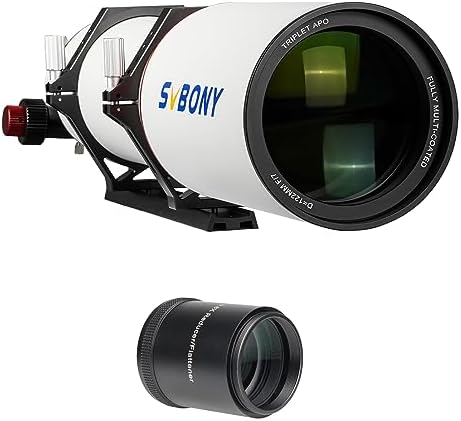
The SVBONY SV550 122mm brings large-aperture power to APO refractors. The FPL-51 triplet structure provides superior correction and clarity. It gathers enough light to reveal fainter deep-sky objects easily.
We may earn a commission when you buy through this link, at no additional cost to you.
The kit includes a field flattener and focal reducer to optimize image quality. This bundle value makes it appealing for serious imagers. The handle and dovetail base enhance portability despite the size.
While costlier than smaller options, the optical performance justifies the investment. The 122mm aperture limits detail on planetary targets. It is heavier, requiring a stable mount for stability.
Ideal for advanced photographers needing light-gathering capability. It offers a complete imaging solution out of the box. A top choice for those prioritizing performance over portability.
The 122mm lens captures more light for detailed views of galaxies and nebulae.
Includes field flattener and accessories to streamline astrophotography setup immediately.
We may earn a commission when you buy through this link, at no additional cost to you.
This APO OTA provides excellent value for those wanting premium optics without high cost. The triplet design virtually eliminates chromatic aberration for bright, crisp images. It supports both visual and imaging applications effectively.
We may earn a commission when you buy through this link, at no additional cost to you.
The magnesium alloy dual-speed focus mount reduces weight and improves handling. Extinction measures inside the lens barrel enhance contrast significantly. It reveals details in celestial bodies with ease.
Though it lacks some accessories, the core optical quality remains top-tier. Users must source their own mount and camera adapters. The performance justifies this minor inconvenience.
Recommended for hobbyists upgrading from achromatic refractors. It delivers professional-grade results at a budget-friendly price. A solid investment for long-term astronomy enjoyment.
Air-spaced triplet design ensures minimal color fringing for clearer deep-sky images.
Suitable for visual observing and astrophotography, offering flexibility for users.
We may earn a commission when you buy through this link, at no additional cost to you.
This bundle includes the SV209 field flattener, ensuring sharp stars across the sensor. The 80mm APO refractor offers excellent clarity for deep-sky targets. The magnesium alloy focus seat reduces weight significantly.
We may earn a commission when you buy through this link, at no additional cost to you.
The package provides extension tubes and adapters for 55mm back focal length. This simplifies setup for astrophotography users. Extinction barriers improve contrast in images.
While the price is slightly higher, the included optics save time and money. Users avoid buying separate flatteners that may not match perfectly. The field of view supports full-frame cameras.
Best for photographers wanting a streamlined workflow. It removes guesswork from accessory selection. Highly recommended for those prioritizing optical completeness.
Field flattener corrects curvature for pinpoint stars from center to edge.
Includes all necessary adapters for immediate imaging without extra purchases.
We may earn a commission when you buy through this link, at no additional cost to you.
The 122mm aperture gathers significant light, revealing faint objects clearly. It is designed as a travel telescope, though weight is a consideration. The portable handle and dovetail base simplify carrying to sites.
We may earn a commission when you buy through this link, at no additional cost to you.
The finder scope mount bracket allows easy installation of guides. This is crucial for long-exposure astrophotography. The triplet lens structure enhances clarity and sharpness across the field.
While larger, the design includes a carrying case for convenience. Users get high limiting magnitude in a relatively compact form. It suits those needing aperture in a portable package.
Ideal for travelers wanting deep-sky capability. It balances performance and mobility well. A strong choice for dedicated field observers.
Carrying handle and case allow easy transport to remote dark sky locations.
122mm aperture collects more light for brighter deep-sky imaging.
We may earn a commission when you buy through this link, at no additional cost to you.
This telescope combines high transmission coatings with S-FPL51 ED glass for true-to-life color. The 360° field rotator allows perfect alignment without tube rotation. It delivers sharp details for planetary observation.
We may earn a commission when you buy through this link, at no additional cost to you.
With 90mm focus travel, it accommodates accessories like filter wheels easily. The retractable hood blocks stray light and prevents dew. Users enjoy brighter views due to FMC coating.
Though not designed exclusively for imaging, it excels visually. The larger aperture provides more detail on deep-sky objects. The build is solid for regular use.
Best for visual observers seeking clarity and detail. It offers robust performance for astronomy hobbyists. A reliable choice for night sky viewing.
Fully Multi-Coated optics improve light transmission for brighter, sharper views.
360° field rotator enables precise camera alignment without moving the tube.
We may earn a commission when you buy through this link, at no additional cost to you.
This bundle specifically addresses field curvature with the SV209 flattener. The 122mm aperture enables imaging of faint deep-sky objects. The 0.8X focal reducer widens the field for better composition.
We may earn a commission when you buy through this link, at no additional cost to you.
The triplet apochromatic lens enhances clarity and sharpness significantly. It corrects chromatic aberration effectively across the field. The design supports prime focus astrophotography well.
While premium priced, the imaging results justify the investment. Users get a complete solution for high-quality deep-sky images. It balances optical quality with necessary accessories.
Ideal for serious astrophotographers needing large aperture. It provides everything needed for professional-quality imaging. A top recommendation for advanced users.
0.8X reducer shortens focal ratio for wider field of view.
Field flattener corrects defects for efficient shooting at field edges.
We may earn a commission when you buy through this link, at no additional cost to you.
This kit is designed for travel with a focus on sharp imagery. The field flattener improves fringe field curvature issues for clean shots. The ultra wide band multilayer coated lens ensures bright images.
We may earn a commission when you buy through this link, at no additional cost to you.
It effectively reduces chromatic aberration using S-FPL51 ED glass. The handle makes transport to dark sky sites easier. Users appreciate the simplicity of observing the Messier catalog.
While aperture is limited compared to larger APOs, clarity is high. The 80mm scope remains versatile for both visual and imaging use. It is well suited for beginners.
Best for hobbyists needing portability. It delivers high-quality results in a small package. A great option for frequent travelers.
Ultra wide band multilayer coating reduces reflections for brighter images.
Compact design and handle allow easy transport to observation sites.
We may earn a commission when you buy through this link, at no additional cost to you.
This kit offers a complete solution with a guide scope and camera included. The 1.23-megapixel camera supports autoguiding effectively for long exposures. The high QE ensures tight tracking of guide stars.
We may earn a commission when you buy through this link, at no additional cost to you.
The 122mm aperture provides strong light gathering for detailed imaging. Users get a tripod-ready imaging system out of the box. It suits those wanting a plug-and-play approach.
Though expensive, it removes the need for separate camera purchases. The guide camera is small and sensitive. The setup requires technical knowledge to align.
Best for photographers seeking a comprehensive bundle. It offers high performance for astrophotography. A solid investment for dedicated hobbyists.
High-sensitivity camera ensures precise autoguiding during exposures.
Includes guide scope and accessories to start imaging immediately.
We may earn a commission when you buy through this link, at no additional cost to you.
Selecting the right apochromatic refractor requires understanding optical specs and how they impact your observing goals. We highlight the key factors to consider when evaluating these telescopes.
Aperture determines how much light the telescope gathers. Larger apertures reveal fainter deep-sky objects but add weight and cost. For astrophotography, 80mm to 102mm balances performance and portability.
Choose a size that matches your transport capabilities and target objects.
Focal ratio affects exposure time and field of view. Lower f-numbers like f/6 capture brighter images quickly. Higher ratios offer more magnification for planetary details.
Select a ratio based on whether you prioritize deep-sky or planetary imaging.
Triplet or quadruplet air-spaced designs correct chromatic aberration effectively. Single-ED lenses are cheaper but may show color fringing. Premium designs ensure sharp, contrast-rich images.
Prioritize triplet or quadruplet optics for professional-quality results.
Field flatteners correct curvature to keep stars sharp across the sensor. Some kits include this accessory; others require separate purchase. Without it, edge stars may appear elongated.
Ensure your setup includes a compatible field flattener for imaging.
Weight and size determine how easy the scope is to transport. Lightweight magnesium components reduce load on mounts. Retractable dew shields save space in carrying cases.
Consider how far you travel to observe and your physical strength.
Most refractors use Vixen or Losmandy dovetail plates. Ensure your mount supports the telescope weight. Some bundles include bases that simplify setup.
Verify mount capacity to prevent instability during long exposures.
Kits with camera or guide scope reduce initial costs. However, check compatibility with existing gear. Some accessories may need adapters to work properly.
Look for bundles that align with your existing equipment needs.
Robust construction ensures longevity. Look for CNC processing and effective baffling inside the barrel. Quality focusers allow precise adjustments for imaging.
Invest in solid build to ensure reliable performance over time.
Proper alignment is critical for sharp images. Use a collimation cap or laser to adjust optical elements. Ensure the tube is centered to avoid tracking issues during exposures.
Clean lenses gently with a soft brush to remove dust. Avoid touching glass surfaces with fingers. Use specialized lens fluid sparingly if stains are present.
Store the telescope in a dry environment to prevent dew and corrosion. Cover the objective lens when not in use. Regularly check screws and mounts for tightness to ensure stability.
An apochromatic refractor uses special glass elements to correct chromatic aberration, providing sharp, color-free images. Unlike achromatic lenses, APOs eliminate color fringing for clearer deep-sky and planetary views.
Yes, for astrophotography, a field flattener ensures stars remain round across the entire sensor. Without it, edge stars may stretch or blur. Many modern kits include one for convenience.
Use a protective carrying case with foam padding to absorb shocks. Keep the tube level during travel to prevent lens shifting. Secure the mount tightly to avoid vibrations.
While possible for terrestrial subjects, apochromatic refractors are designed for astronomical use. They invert images, making them less ideal for standard spotting scopes without additional optics.
DSLRs or dedicated astronomy cameras with high quantum efficiency work best. Ensure the camera sensor matches the telescope's focal ratio for optimal framing. Guide cameras help track stars during long exposures.
Most APO refractors come pre-collimated at the factory. If needed, use adjustment screws in the cell to align optics. Check star images to ensure perfect centering before imaging.
This guide highlights top apochromatic refractors like the SVBONY SV550 and Askar 71F. Each offers unique advantages for visual or imaging use. Your choice depends on budget and specific observing goals.
Prioritize optical quality and portability to ensure long-term satisfaction. A well-chosen refractor can provide years of enjoyment. Consider accessories like flatteners and cameras for best results.
Always verify current prices and availability before purchasing. Prices change frequently, so check for updates. Enjoy exploring the night sky with your new telescope.