
Battery Equalizer 48V, Voltage Balancer
4.3Editor score
Compatible with 12V batteries
5A max compensation current
Reverse polarity protection included
This guide compares the top 12V 24V 48V Battery Equilizer Balancer models for optimal battery life, safety features, and active balancing technology across
Finding the right battery balancer is crucial for maintaining long life in multi-battery systems. Whether you manage an RV, boat, or off-grid setup, voltage differences can degrade performance. A quality equilizer ensures each cell stays balanced, preventing early failure and maximizing efficiency.
We compared ten leading models based on voltage compatibility, active versus passive balancing, safety features, and user feedback. Our analysis focuses on how well each unit handles series and parallel configurations while protecting against overheat or reverse polarity. This list helps you choose the right tool for your specific bank.
Each pick highlights key strengths like display clarity, current capacity, and build quality. Prices vary by features and brand reputation, so check current listings before buying. Proper installation and regular monitoring will extend your battery bank's lifespan significantly over time.
4.3Editor score

4.3Editor score

4.1Editor score
The following table provides a side-by-side comparison of all ten selected battery equilizer balancers. It highlights their core specifications, compatibility ranges, and unique features to help you identify the best fit for your energy storage needs quickly.



The LiTime 48V Battery Balancer stands out as a top choice for active balancing in diverse battery banks. With a 4.3 rating, it offers robust protection and supports everything from 24V to 48V systems efficiently.
We may earn a commission when you buy through this link, at no additional cost to you.
Its active balancing functions optimize performance by equalizing voltages automatically. This prevents degradation in series configurations and ensures every cell contributes equally to output power demands.
While it needs a voltage difference to activate, this is standard for efficiency. The standby mode draws minimal current, preserving your bank's energy when not actively balancing differences.
Ideal for RVs and off-grid systems, this balancer is a trusted companion. It protects your investment against wiring errors and overheating while extending overall cycle life significantly.
This feature ensures all batteries in a series reach the same charge level quickly, maximizing usable capacity.
Reverse polarity and high-temperature protection guard against common failures, backed by product liability coverage for added peace of mind.
We may earn a commission when you buy through this link, at no additional cost to you.
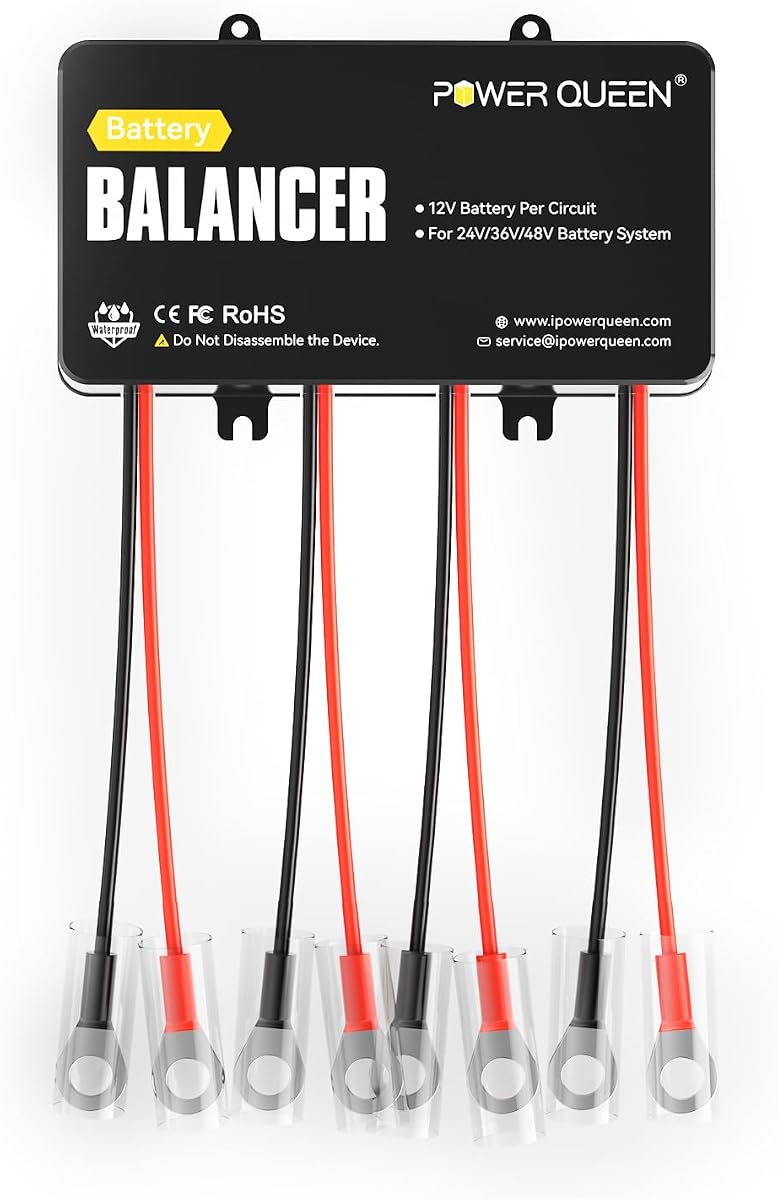
The Power Queen 48V Balancer excels in automation with its intelligent standby mode. It activates when voltage differences exceed 10mV, ensuring constant health without user intervention in your system.
We may earn a commission when you buy through this link, at no additional cost to you.
Its compatibility with LiFePO4 and lead-acid types makes it versatile for modern and traditional banks. The active technology significantly prolongs service life by keeping all cells at equal states of charge.
Users note that following the correct series-parallel connection order is vital. If done right, the balancer draws only 5mA in standby, making it safe for long-term continuous connection.
Best for solar homes and RVs, this unit offers reliability. It protects against wiring errors and overheating while delivering efficiency across your entire energy storage setup.
This system automatically adjusts to voltage discrepancies, reducing manual checks and ensuring consistent performance during discharge cycles.
With a standby draw of just 5mA, it conserves battery energy when not actively balancing, crucial for off-grid independence.
We may earn a commission when you buy through this link, at no additional cost to you.
Victron is a trusted name in power systems, and this balancer lives up to that legacy. It targets 24V systems primarily but can be paralleled for higher voltages if needed for your bank.
We may earn a commission when you buy through this link, at no additional cost to you.
The unit activates when charge voltage exceeds 27V, drawing up to 1Amp from the highest voltage battery. This differential current ensures all cells converge to the same state of charge over time.
While 1A is lower than 10A competitors, it is effective for gradual equalization in lead-acid setups. Users appreciate the robust build quality and straightforward operation without complex settings.
Ideal for those prioritizing reliability, this balancer reduces the risk of individual cell failure. It works seamlessly in both series and parallel configurations to maintain consistent system health.
Activation occurs only when voltage thresholds are met, ensuring balancing happens when most needed during charging cycles.
Multiple units can be paralleled to handle 48V banks, offering flexibility for larger custom battery systems.
We may earn a commission when you buy through this link, at no additional cost to you.
This Battery Equalizer offers impressive flexibility, handling banks from 12V up to 96V. It suits applications like forklifts, golf carts, and large solar arrays where voltage requirements vary widely.
We may earn a commission when you buy through this link, at no additional cost to you.
Each module corresponds to two batteries, so multiple units can be installed in parallel connections easily. The rail-type buckle design simplifies mounting in distribution boxes, saving installers time.
While it works for lithium and lead-acid types, ensure the single battery voltage stays within 5V to 18V. The device maintains balance during charge and discharge to maximize service life.
Recommended for heavy-duty automotive use, this equalizer ensures every battery performs consistently. Its simple design makes it a practical choice for industrial and recreational setups alike.
Supporting up to 96V allows use in large banks without custom wiring solutions, making it versatile for industrial applications.
The rail-type buckle installation ensures secure placement in tight electrical boxes, reducing the risk of loose connections over time.
We may earn a commission when you buy through this link, at no additional cost to you.
This 48V Balancer features an LED display for clear status monitoring, which is rare in budget options. It connects four 12V batteries easily and suits both series and parallel configurations.
We may earn a commission when you buy through this link, at no additional cost to you.
While its rating is lower at 3.7, it includes low voltage disconnect and reverse polarity protection. These safeguards help prevent damage during installation or unexpected battery behavior in the system.
For users needing visual confirmation, the LED screen provides peace of mind. It ensures the unit is working as intended without requiring external multimeter checks constantly.
Ideal for boats and golf carts, this equalizer is a practical solution. It supports a wide range of battery types and can be paralleled for higher voltage needs in larger setups.
The LED display lets users track status instantly, avoiding guesswork during maintenance or troubleshooting sessions in the field.
Low voltage disconnect and reverse polarity protection keep batteries safe, ensuring the unit handles common risks automatically during operation.
We may earn a commission when you buy through this link, at no additional cost to you.
The Redodo Balancer offers strong 10A equalization for 24V systems, making it fast for maintaining balance between two 12V strings. Its LED display clearly shows voltage for both connected batteries simultaneously.
We may earn a commission when you buy through this link, at no additional cost to you.
With a 4.4 rating and a one-year warranty, it stands out for reliability and support. The high-temperature and reverse connection protections ensure the unit survives accidental wiring errors without damage.
While specific to 24V, this model is ideal for smaller RV or off-grid setups. It handles LiFePO4 and gel types, providing flexibility for modern lithium batteries alongside traditional lead-acid ones.
Recommended for marine and solar storage, it ensures endurance and health. The automatic operation requires no intervention, keeping your battery pack in optimal shape year after year.
At 10A, it balances voltage differences quickly, reducing downtime and ensuring your batteries are ready when you need them.
A 1-year warranty and 24/7 technical support provide confidence, ensuring help is available if you face any setup issues.
We may earn a commission when you buy through this link, at no additional cost to you.
This Power Queen model delivers active balancing that optimizes battery performance across 24V to 48V systems. It automatically balances until differences drop below 10mV, ensuring uniform charge states throughout.
We may earn a commission when you buy through this link, at no additional cost to you.
Its low-power standby mode draws just 5mA, conserving energy when balanced. Users appreciate the critical safeguards like high-temperature protection, which prevent overheating during long-term installation in hot environments.
While wiring correctly in parallel first is essential for safety, once connected, the unit runs smoothly. It supports diverse battery types, making it a universal solution for different storage needs.
Best for energy storage systems and RVs, it offers reliable longevity. The balanced output improves efficiency and reduces the risk of premature battery failure in your bank.
The unit detects voltage discrepancies instantly, starting balancing work to prevent degradation before it impacts your battery health.
Standing by at only 5mA means minimal energy drain, crucial for maintaining reserve power in off-grid or emergency backup setups.
We may earn a commission when you buy through this link, at no additional cost to you.
This budget-friendly Battery Equalizer balances two 12V batteries with a 5A compensation current. It suits smaller systems where cost is a priority without sacrificing essential protection features.
We may earn a commission when you buy through this link, at no additional cost to you.
Smart indicator lights offer clear visibility of working status, helping users confirm operation. The low-voltage cutoff and reverse polarity protection safeguard battery health, extending service life effectively.
While 5A is lower than 10A models, it is sufficient for gradual balancing in many scenarios. You can connect multiple units in parallel for 48V systems if needed for your setup.
Ideal for hobbyists or small solar rigs, this unit offers reliable value. It handles Ni-Cd and LiFePO4 types, ensuring versatile support for various battery chemistries.
Affordable pricing ensures you can protect every battery string without overspending, making it ideal for large multi-bank setups.
Multiple units connect easily in parallel for higher voltages, providing scalable protection for growing energy storage needs.
We may earn a commission when you buy through this link, at no additional cost to you.
The HA01 Equalizer uses high-precision chips to reduce voltage deviation, ensuring stable performance across connected battery strings. Its digital display offers users an easy way to check system voltage at a glance.
We may earn a commission when you buy through this link, at no additional cost to you.
With a 20mV detection threshold and 5A compensation, it balances efficiently for 24V systems. It also works for 36V and 48V configurations when using multiple units in series-parallel setups as needed.
Users note that the flame retardant shell adds safety for heat management. Low power consumption makes it suitable for long-term installation without draining your battery bank significantly.
Recommended for cars and solar setups, this tool protects against damage. It extends battery life by maintaining balance automatically, reducing maintenance efforts over time.
Reducing voltage deviation ensures more accurate balancing, preventing false readings and improving overall system reliability for your battery pack.
The flame retardant shell provides extra protection against heat hazards, essential for indoor or high-temperature battery storage environments.
We may earn a commission when you buy through this link, at no additional cost to you.
The MAZAVA HX02 offers an LCD Display monitor for deep insights into your battery bank's voltage and status. It supports active balancing for 4S 12V systems, providing precise control over charge states.
We may earn a commission when you buy through this link, at no additional cost to you.
With an aluminum alloy shell, heat dissipation is superior, allowing for faster equalizer speeds. Users benefit from multi-module parallel support, which enables scaling to larger 48V or higher configurations.
While pricier than standard options, the detailed monitoring and durability justify the cost. The wide single battery voltage range of 7 to 18V ensures flexibility across different battery chemistries.
Best for enthusiasts needing precise control, this equalizer optimizes performance. It helps maintain balanced current flow, ensuring your batteries reach maximum potential during every charge cycle.
The LCD shows real-time data, helping you track balance accuracy and detect any issues before they affect battery health or system performance.
Aluminum alloy housing keeps temperatures stable during heavy balancing, allowing faster and more consistent equalization without thermal risks.
We may earn a commission when you buy through this link, at no additional cost to you.
Choosing the right balancer depends on your battery type, voltage configuration, and specific performance needs. Reviewing key factors ensures you select a unit that maximizes longevity and safety.
Ensure the balancer supports your system voltage, such as 24V or 48V. Models differ in their maximum range, so verify the unit matches your battery bank setup to avoid incompatibility issues.
Always check that the single battery range aligns with your 12V units to prevent damage from over-voltage or under-voltage conditions.
Active balancers use current to equalize voltage differences, offering better performance for lithium batteries. Passive options rely on discharge, which can be slower and less efficient for high-capacity systems.
For longer battery life and faster equalization, active balancing is generally the superior choice in modern storage applications.
Higher current ratings like 10A allow faster balancing between cells. This reduces the time needed to correct voltage discrepancies, ensuring your battery bank is ready for use more quickly after charging.
Select a model with adequate current to match your bank's capacity and balancing frequency requirements for optimal results.
Look for reverse polarity protection and high-temperature safeguards to prevent damage during installation or operation. These features protect both the balancer and your battery bank from electrical faults.
Safety features are critical to maintaining a secure energy system, especially in environments prone to wiring errors or heat.
Units with LED or LCD displays provide real-time voltage data, simplifying system checks. This visibility helps you monitor balancing progress and detect issues before they become serious.
Visual indicators are valuable for maintenance, ensuring you can confirm operation without extra tools or testing equipment.
Consider how the unit mounts, such as rail-type buckles or standard wiring. Easy installation reduces setup time and helps secure the device in tight electrical boxes for better reliability.
Choose a design that fits your enclosure space and installation preferences to ensure long-term stability and performance.
A warranty like one year indicates manufacturer confidence in product quality. Access to technical support helps resolve setup or performance issues quickly if they arise during use.
Reliable support ensures you can troubleshoot problems effectively, extending the useful life of your investment.
First, identify your battery bank configuration and ensure the balancer matches your voltage needs. Check that each battery is the same type and age for best performance during operation.
Connect the balancer according to the wiring diagram, prioritizing parallel connections before series if required. Use secure terminals to avoid loose contacts that can interfere with balance.
After installation, monitor the device for initial operation. Allow time for automatic balancing to occur, and check the display to confirm voltage discrepancies are reducing correctly.
A battery equilizer balancer maintains equal voltage across connected batteries in a bank. It prevents individual cells from becoming overcharged or undercharged, which extends overall lifespan and improves system efficiency.
While less critical than lithium, balancers still help prevent sulfation and imbalance in lead-acid banks. They ensure uniform charge levels, especially in series setups where voltage mismatches occur easily.
Wiring depends on the unit, but often connect positive to positive and negative to negative of series strings. Check the manual for specific terminals and ensure parallel-first configurations if needed.
No, a balancer maintains balance but cannot repair degraded cells. It prevents future issues by equalizing voltage, which helps healthy batteries perform better over time without masking existing damage.
Most modern units have low-power standby modes that draw minimal current, often under 5mA. This ensures they do not significantly impact your bank's reserve power during inactivity.
Active balancing uses current to equalize voltage, offering faster and more consistent results than passive methods. It is generally preferred for lithium and larger banks where performance matters.
It depends on the model. Some support 48V directly, while others require multiple units connected in parallel. Always check the voltage range to ensure compatibility with your bank.
Top picks like the LiTime 48V and Power Queen models offer active balancing and wide compatibility for diverse systems. The Redodo and Victron options provide specialized strengths for 24V or lead-acid banks.
Prioritize units with safety features like reverse polarity protection and high current capacity. Consider display options for easier monitoring and ensure the model fits your installation space.
Check current listings for stock and any updates before purchasing. Proper use of a quality balancer will keep your battery bank healthy and efficient for years to come.