
Intel Celeron G3900
4.6Editor score
2.80 GHz base frequency
51 watts thermal design power
Integrated HD Graphics 510
This guide compares the top low power CPU options for energy efficiency and performance across various computing needs and budgets in October 2026.
Choosing the right low power CPU is essential for building energy-efficient systems that deliver solid performance without excessive heat or electricity costs. Whether you are assembling a home server, a compact office PC, or a media center, selecting a processor with a low thermal design power rating ensures your system runs cool and quiet while maintaining responsiveness for daily tasks and specialized applications.
We have evaluated ten distinct processors and integrated solutions to determine which ones offer the best balance of efficiency, core count, and architectural modernity. Our analysis focuses on real-world usage scenarios including network attached storage, virtualization, gaming on integrated graphics, and general productivity. We considered TDP ratings, socket compatibility, cache sizes, and the availability of integrated graphics to provide a comprehensive overview for builders seeking value and sustainability.
Each pick in this list highlights specific strengths such as budget friendliness, raw multi-threaded performance, or advanced networking capabilities built into the motherboard. While the data reflects current market availability, prices and stock levels fluctuate frequently so you should verify the latest details before making a purchase. Use the comparison table and detailed reviews below to identify the processor that aligns best with your specific hardware requirements and power constraints.
4.6Editor score
4.7Editor score

4.1Editor score
The following table provides a side-by-side comparison of all ten low power CPU options reviewed in this guide. It highlights key specifications such as core counts, clock speeds, thermal design power, and specific use cases to help you quickly identify the best fit for your project.


The Intel Core i7-6700T stands out as a robust low power CPU option designed for users who need multi-threaded performance without the heat of a standard desktop processor. With a 35W TDP this T delivers reliable throughput for productivity tasks and light virtualization while keeping energy usage in check. Its rating of 4.5 reflects its enduring popularity in compact builds and office environments where efficiency is key.
We may earn a commission when you buy through this link, at no additional cost to you.
Key strengths include its four cores and eight threads which allow it to handle background processes and multitasking effectively. The optimized cache subsystem ensures data transfers are quick and latency remains low even under load. This makes it suitable for applications that require consistent performance over long periods without thermal throttling issues.
Honest trade-offs involve its age since it belongs to an older generation of Skylake architecture which means it lacks some modern instruction sets found in newer chips. Additionally as a tray model it does not come with a stock cooler so you will need to source a compatible fan separately to ensure safe operation.
Who should buy it is builders focusing on silent home theater PCs or entry-level servers where power draw matters more than raw peak performance. It remains a strong recommendation for those who already have an LGA1151 motherboard and want to upgrade to a more efficient processor without replacing the entire system.
The 35W TDP ensures the system uses less electricity and generates less heat than standard desktop CPUs making it ideal for always-on systems.
With eight threads you can run multiple applications simultaneously without significant slowdowns which is perfect for office workstations.
We may earn a commission when you buy through this link, at no additional cost to you.
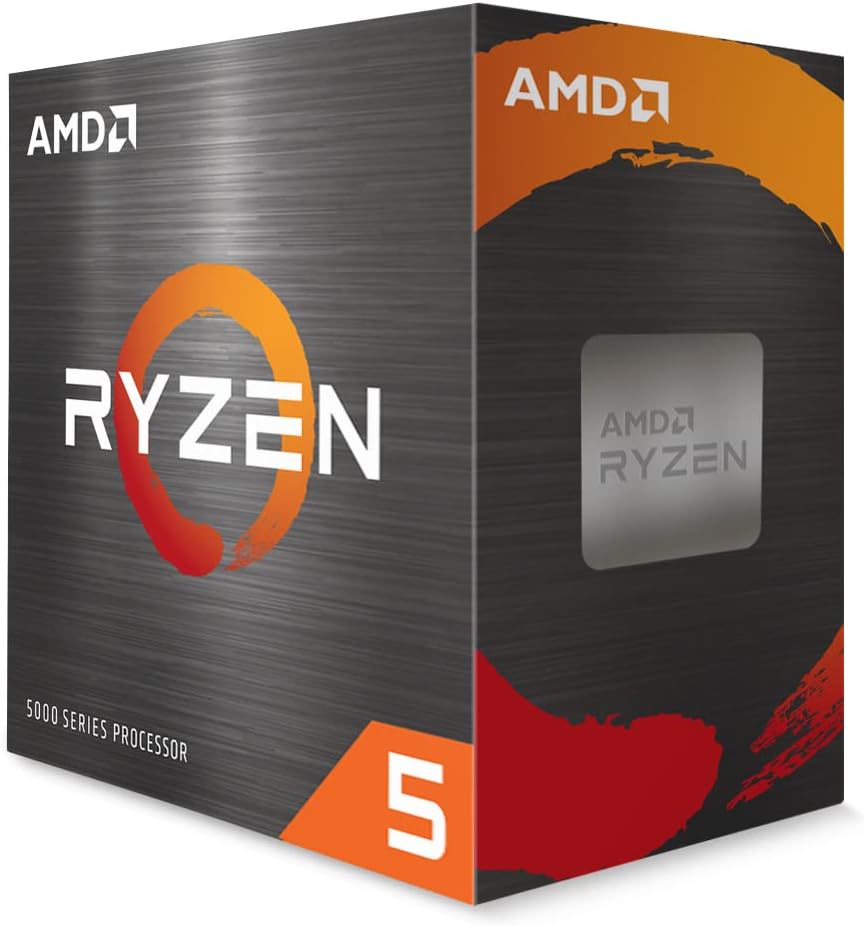
The AMD Ryzen 5 5500 offers a compelling blend of modern architecture and efficiency making it a top choice for gamers and creators who want value. Its 6.7 rating highlights its ability to deliver over 100 FPS in popular titles when paired with a discrete graphics card. The inclusion of the Wraith Stealth cooler adds significant convenience for builders looking to streamline their assembly process.
We may earn a commission when you buy through this link, at no additional cost to you.
This processor features six cores and twelve threads which provide ample headroom for multitasking and content creation tasks. The max boost clock of 4.2 GHz ensures responsive performance in single-threaded applications while the unlocked multiplier allows enthusiasts to tweak performance further. Support for DDR4-3200 memory enhances bandwidth for data-heavy workloads.
Trade-offs include the requirement for a separate graphics card which adds to the overall cost and power draw of the system. While the TDP is higher than ultra-low power options it is reasonable for the performance provided. Users should ensure their power supply can handle the combined load of CPU and GPU under peak usage.
Buyers seeking a versatile low power CPU for gaming rigs or workstations will find this model hard to beat. It is particularly well-suited for those on the AM4 platform who want a significant performance uplift without migrating to a new motherboard. The balance of price and capability makes it a standout choice in this roundup.
The combination of 6 cores and high clock speeds allows for smooth frame rates in modern games with minimal stuttering.
Having the Wraith Stealth cooler in the box saves money and simplifies installation for first-time builders.
We may earn a commission when you buy through this link, at no additional cost to you.
The Intel Celeron G5900 is a straightforward option for budget-conscious users building basic office PCs or home servers. With a rating of 4.5 it proves reliable for everyday computing needs like web browsing and document editing. The 3.4 GHz base frequency provides adequate speed for single-threaded applications without demanding complex cooling solutions.
We may earn a commission when you buy through this link, at no additional cost to you.
Its support for the Intel 400 series chipset means it works with modern motherboards that offer better connectivity options than older platforms. Intel Optane Memory support allows users to boost system responsiveness by using fast storage as a cache layer. This feature is particularly useful for older mechanical drives that need a speed boost.
The main limitation is its dual-core dual-thread configuration which restricts performance in multi-threaded scenarios. If you plan to run heavy background tasks or virtual machines you may find this CPU limiting. However for light duty use it remains cost-effective and efficient in terms of power consumption relative to its class.
Ideal buyers are those constructing a dedicated media server or a low-cost kiosk system where simplicity and cost are priorities. It is also suitable for families needing a basic desktop for school work and entertainment. If you value stability and affordability over raw power this processor is a smart investment.
Compatibility with the LGA1200 socket ensures access to newer motherboard features and future upgrade possibilities within the same family.
Optane Memory support helps improve boot times and application loading speeds on systems using traditional hard drives.
We may earn a commission when you buy through this link, at no additional cost to you.
The Intel Core i7-2600S is an older low power variant designed to offer quad-core performance with reduced power consumption compared to standard models. Although it has a lower rating of 3.9 it still holds value for hobbyists seeking cheap multi-threaded performance. The 2.8 GHz base clock is stable and allows for consistent workloads over extended periods.
We may earn a commission when you buy through this link, at no additional cost to you.
One of its strengths is the enhanced cache subsystem and memory controller which support three channels of DDR3 memory. This configuration enables high bandwidth and low latency data transfers beneficial for data-intensive applications. It is optimized for multi-threaded games and professional workloads that rely on core count.
However being an older generation part it consumes more power per clock cycle than modern chips and lacks support for newer instruction sets. The 3.9 rating reflects the mix of solid performance and outdated technology. Buyers should be aware of compatibility issues with modern operating systems and drivers.
This CPU is best suited for retro gaming builds or specialized legacy systems where cost is the primary driver. It works well in environments where the hardware is dedicated to specific tasks and does not require cutting edge efficiency. Enthusiasts comfortable with older technology will appreciate its raw capability for the price.
The S-series designation ensures lower power draw while maintaining the core and thread count needed for parallel processing tasks.
Three channel memory support helps maximize data throughput for applications that need rapid access to large datasets.
We may earn a commission when you buy through this link, at no additional cost to you.
The AMD Athlon 200GE is an affordable low power CPU that includes Radeon Vega graphics making it a strong contender for basic multimedia systems. Its 4.4 rating indicates satisfaction among users looking for a reliable processor for everyday computing. The included near-silent cooler ensures that noise levels remain minimal during daily operation.
We may earn a commission when you buy through this link, at no additional cost to you.
Key features include support for up to four threads which helps with basic multitasking better than dual-thread options. The 3.2 GHz clock frequency provides responsive performance for web browsing and video playback. Since it uses the AM4 socket you can eventually upgrade to a more powerful Ryzen processor without changing the motherboard.
While the graphics performance is decent for light gaming and video it is not intended for demanding titles. The DDR4 support maxes out at 2667 MHz which is lower than what high-end Ryzen chips support. This makes it a good stop-gap solution but not a long-term high-performance choice.
Ideal for home office setups or streaming media centers where you want a single box solution without a separate GPU. Families needing a computer for homework and browsing will find this offers good value. Its efficiency and upgrade path make it a flexible choice for budget builders.
Radeon Vega 3 graphics allow for smooth video playback and light gaming without needing a dedicated graphics card.
The AM4 socket compatibility means you can swap in a stronger CPU later if your needs grow over time.
We may earn a commission when you buy through this link, at no additional cost to you.
The Intel Celeron G3900 is a highly rated budget option that delivers consistent performance for entry-level computing tasks. With a rating of 4.6 users appreciate its simplicity and low power requirements. The 2.80 GHz base frequency ensures that common applications load quickly and run smoothly without demanding complex cooling setups.
We may earn a commission when you buy through this link, at no additional cost to you.
This processor is designed for systems where basic tasks are the priority such as web browsing and office applications. The retail packaging indicates it comes with necessary components for immediate installation. Its direct media interface speed supports efficient communication between the CPU and other system components.
Limitations are primarily related to its dual-core dual-thread nature which means heavy multitasking may cause slowdowns. It lacks advanced features like overclocking support found in higher-end models. However for the target audience of home users these constraints are often acceptable given the low cost.
Best for building a secondary PC or a budget workstation where cost efficiency is the main goal. It is also suitable for digital signage or kiosks where reliability is key and complex performance is not needed. The high rating reflects user satisfaction with its value proposition.
This processor offers a cost-effective entry point into the LGA1151 platform allowing for simple and budget-friendly builds.
Buying the retail version ensures you receive the necessary support and packaging for a straightforward setup process.
We may earn a commission when you buy through this link, at no additional cost to you.
The Intel Celeron G4900 is a compact low power CPU that provides adequate speed for daily computing tasks with minimal energy use. Its 4.3 rating suggests it is well received by users who need a reliable processor for workstations. The 3.1 GHz base frequency is slightly higher than previous models offering better single-core performance.
We may earn a commission when you buy through this link, at no additional cost to you.
It is compatible with Intel 300 series chipsets which are widely available and support modern features. The 54W TDP ensures the processor runs cool enough for small form factor cases without needing high-end cooling. A thermal solution is included in the package which simplifies the assembly process for builders.
Trade-offs include limited core count which restricts its ability to handle intensive multitasking scenarios. It is not designed for overclocking so performance is fixed at stock settings. While this limits tuning options it ensures stability and reduces the risk of overheating during heavy loads.
Ideal for corporate environments or home offices where a silent and efficient system is required. It handles email and document work with ease making it a practical choice for productivity. If you value simplicity and low heat output this CPU is a solid option.
The low power design allows for quiet operation in smaller cases where airflow might be restricted.
Fixed performance settings ensure the system remains reliable without the need for complex configuration.
We may earn a commission when you buy through this link, at no additional cost to you.
This variant of the Intel Celeron G3900 offers specific features like ECC memory support which is useful for specialized systems. With a 4.1 rating it serves as a solid option for servers that require error correction for data integrity. The 51 Watts TDP ensures efficient operation suitable for continuous uptime environments.
We may earn a commission when you buy through this link, at no additional cost to you.
Integrated Intel HD Graphics 510 provides basic display capabilities for light multimedia or monitoring tasks. The 2.80 GHz frequency delivers consistent performance for server-side applications. It is a CPU only package so you will need to provide your own fan and paste for cooling.
The main trade-off is the lack of included cooling components which adds to the assembly effort. Older architecture means it may not support the latest software optimizations. However for specific use cases like small servers the ECC support is a rare benefit at this price point.
Suitable for technical users building small home servers or network appliances. The ability to use ECC memory enhances stability for data storage tasks. If you need a cheap CPU with specific enterprise features this model is worth considering.
Support for ECC memory helps prevent data corruption which is vital for reliable server operations.
Basic integrated graphics allow for a visual interface without needing a dedicated graphics card.
We may earn a commission when you buy through this link, at no additional cost to you.
The Intel Celeron G5905 is a robust entry-level processor that delivers decent performance for home use. Its 4.5 rating shows users are satisfied with its ability to handle everyday tasks efficiently. The 3.5 GHz base frequency is higher than many competitors which helps with responsive computing.
We may earn a commission when you buy through this link, at no additional cost to you.
It uses the LGA1200 socket which is compatible with a wide range of modern motherboards. Being a boxed processor it includes a cooling solution that simplifies installation. The design focuses on low power consumption making it ideal for systems that need to run quietly and economically.
Limitations include only two cores and threads which means it can struggle with heavy multitasking. It lacks advanced features found in higher-tier chips like large cache sizes. For the intended audience of casual users these constraints are balanced by the cost and power efficiency.
Best for general home use such as browsing and media consumption. It is also suitable for office PCs where high performance is not a priority. If you need a simple reliable processor for basic tasks this model is a good pick.
A 3.5 GHz base ensures that single-threaded tasks complete quickly providing a snappy user experience.
The retail box includes all necessary cooling components making it ready to install out of the box.
We may earn a commission when you buy through this link, at no additional cost to you.
This Mini-ITX motherboard bundle is a premium solution for building a compact low power server or NAS system. It features a quad-core 8-thread low-power CPU that delivers up to 3.9GHz turbo frequency while maintaining a 15W TDP. The rating of 4.1 indicates it is well-suited for specialized network and storage applications.
We may earn a commission when you buy through this link, at no additional cost to you.
The board includes dual 2.5GbE network ports which provide high-speed connectivity perfect for data transfers. It supports virtualization with VT-x and VT-d allowing you to run multiple operating systems efficiently. With eight SATA ports and M.2 NVMe slots it offers extensive storage expansion capabilities for growing needs.
Trade-offs include a potential sleep mode bug that may require patience during boot or updates. The design is compact which can make component installation tighter than standard boards. However the industrial features and connectivity options justify these complexities for server users.
Ideal for power users building a home server firewall or firewall appliance. The low power consumption combined with high network speed makes it an excellent choice for always-on systems. If you value integration and efficiency this all-in-one solution is a top recommendation.
VT-x and VT-d support ensure that you can run virtual machines with stable and efficient operation.
Dual 2.5G LAN ports enable fast data transfer rates essential for NAS and network security systems.
We may earn a commission when you buy through this link, at no additional cost to you.
Selecting the right low power CPU involves balancing thermal design power with the performance you need for your specific applications.
TDP is a critical factor when choosing a low power CPU as it indicates how much heat the processor will generate and how much power it will consume. A lower TDP usually means better energy efficiency and quieter operation which is essential for compact builds or always-on systems. Look for processors with 35W or lower if you want maximum efficiency or consider 45W to 65W if you need more performance for tasks like gaming. Understanding your power budget and cooling capabilities will help you narrow down the options quickly.
Always check the TDP rating against your cooling solution and power supply to ensure safe operation.
The number of cores and threads determines how well a CPU can handle multitasking and multi-threaded applications. For basic tasks like browsing and office work a dual-core processor is often sufficient. However if you plan to run virtual machines or content creation tools you should aim for at least four cores and eight threads. More cores allow the system to divide tasks efficiently which leads to smoother performance under load.
Prioritize core count based on whether you need basic computing or more advanced multitasking capabilities.
Ensuring the CPU matches your motherboard socket is essential for compatibility and future upgrades. For example the LGA1151 and AM4 sockets have different generations of processors that may work on the same board but require BIOS updates. Check the specific socket type and supported chipset list before purchasing to avoid fitting issues. Having a compatible socket also gives you the flexibility to upgrade to a stronger CPU later without replacing the motherboard.
Verify the socket type and chipset compatibility with your existing or planned motherboard before buying.
Integrated graphics are important if you do not plan to use a separate graphics card. Processors like the AMD Athlon 200GE include Radeon Vega graphics which are capable of light gaming and video playback. Intel models often use HD Graphics which are suitable for basic display output. If your use case involves video editing or gaming you may still need a discrete GPU even if the CPU has integrated graphics.
Look for integrated graphics if you want a cost-effective solution that does not require a dedicated GPU.
Memory support dictates the type and speed of RAM you can use which affects overall system performance. Most modern low power CPUs support DDR4 memory with speeds ranging from 2133 MHz to 3200 MHz. Ensure the CPU supports the memory speed you plan to buy to avoid bottlenecks. Some processors also support advanced features like Intel Optane Memory which can boost storage performance on systems with older drives.
Confirm the supported memory type and speed to ensure your RAM matches the CPU capabilities.
Consider the potential for future upgrades when selecting a low power CPU especially if you plan to keep the same motherboard for several years. Platforms like AM4 allow you to swap in stronger processors later as your needs grow. Check the manufacturer support page for BIOS update requirements for newer CPUs on existing boards. A good upgrade path saves money in the long run by extending the life of your system.
Research the upgrade possibilities for your chosen socket to ensure you can future-proof your build easily.
Power efficiency is often the primary reason for choosing a low power CPU over a standard desktop processor. Look for models that balance performance with energy draw to keep electricity bills and cooling requirements low. Always-on systems like servers benefit significantly from highly efficient chips that do not generate excess heat. Comparing the wattage of different options helps you select the most sustainable choice for your home or office.
Focus on processors that offer the best performance per watt for your specific use case and energy goals.
Your budget plays a major role in determining which low power CPU you can afford without compromising on essential features. Prices vary significantly between entry-level options like Celeron and higher-end chips like Ryzen or Core i7. Set a clear budget range and prioritize features that matter most to you such as core count or integrated graphics. Sometimes paying a bit more for a newer platform can save money on motherboard and cooling costs in the long term.
Establish a clear budget that allows you to buy the CPU along with necessary motherboard and cooling components.
When installing your low power CPU ensure you align the pins or contact pads correctly with the motherboard socket to avoid damage. Apply a small amount of thermal paste if the cooler does not come pre-applied and secure the cooler firmly to ensure proper heat transfer.
Monitor the system temperature using built-in BIOS tools or software utilities to ensure the CPU remains within safe operating limits. Low power CPUs run cooler but proper airflow in the case is still necessary to dissipate heat effectively especially in compact builds.
Keep your system clean from dust and debris using compressed air periodically to maintain airflow and cooling efficiency. Ensure your power settings in the operating system are configured to balance performance and energy savings for optimal daily use.
A low power CPU typically has a lower Thermal Design Power rating which means it consumes less electricity and generates less heat than a standard CPU. This makes it ideal for compact systems silent home theaters or always-on servers. Standard CPUs offer higher peak performance for demanding tasks but require more cooling and electricity to operate.
Most low power CPUs are not unlocked for overclocking meaning you cannot increase their clock speed beyond factory settings. However some models like the AMD Ryzen 5 5500 are unlocked and allow for performance tuning. Check the product specifications for K or X series designations or specific unlock features before attempting overclocking.
Low power CPUs generally require standard cooling solutions since they generate less heat than high-performance chips. In some cases the included stock cooler is sufficient for operation. Ensure your case has decent airflow to prevent heat buildup even with low TDP processors.
Entry-level low power CPUs are not ideal for modern gaming on their own as they lack the core count and speed needed for high frame rates. However some models like the AMD Ryzen 5 5500 can deliver solid gaming performance when paired with a dedicated graphics card. For light gaming with integrated graphics consider models with stronger built-in GPU units.
Yes low power CPUs are excellent for home servers because they can run continuously without consuming too much electricity. Models with multiple cores and virtualization support like the Mini-ITX option in this guide are particularly well suited for network storage and media services. Their efficiency reduces long-term running costs significantly.
Most modern low power CPUs support DDR4 memory with speeds up to 3200 MHz. However check the specific processor specs to confirm the supported range as some budget models may limit speeds to 2667 MHz. Using memory within the supported range ensures stability and optimal performance without compatibility issues.
We have explored ten low power CPU options ranging from entry-level budget chips to more advanced solutions for networking and virtualization. The AMD Ryzen 5 5500 stands out for its balance of performance and efficiency while the Intel Core i7-6700T offers solid multi-threaded capabilities for older platforms.
When making your choice prioritize the factors that matter most for your specific project such as core count for multitasking or TDP for energy savings. Consider the socket compatibility and upgrade path to ensure your system remains useful for years to come without requiring frequent replacements.
Prices and stock levels are subject to change so be sure to check the current listings before finalizing your purchase. Use the links provided to verify availability and secure the best deal for your chosen low power CPU.