
Upgraded Version Bed Sensor Alarm and Fall Prevention
4.5Editor score
Motion sensor detects floor contact
Dual power supply options
No loud room alarm
Falls and wandering are serious risks for elderly individuals and those living with dementia. A reliable bed alarm system provides caregivers with immediate alerts when a loved one attempts to leave the bed. This technology offers peace of mind and helps prevent injuries during nighttime hours.
We have evaluated ten leading bed alarm products available on the market. Our comparison focuses on sensor accuracy, wireless range, ease of setup, and caregiver notification features. Each product was selected based on its ability to detect bed exit movements without triggering excessive false alarms.
Every selection below highlights key specifications and real-world performance insights. You will find detailed breakdowns of how each system works and who it suits best. Please note that availability and terms may change so verify details before purchasing.
4.5Editor score
4.8Editor score
4.6Editor score
As an Amazon Associate we earn from qualifying purchases.
The following table provides a side by side overview of all ten selected products. It highlights key specifications such as sensor type, range, and alert modes to help you make an informed decision.


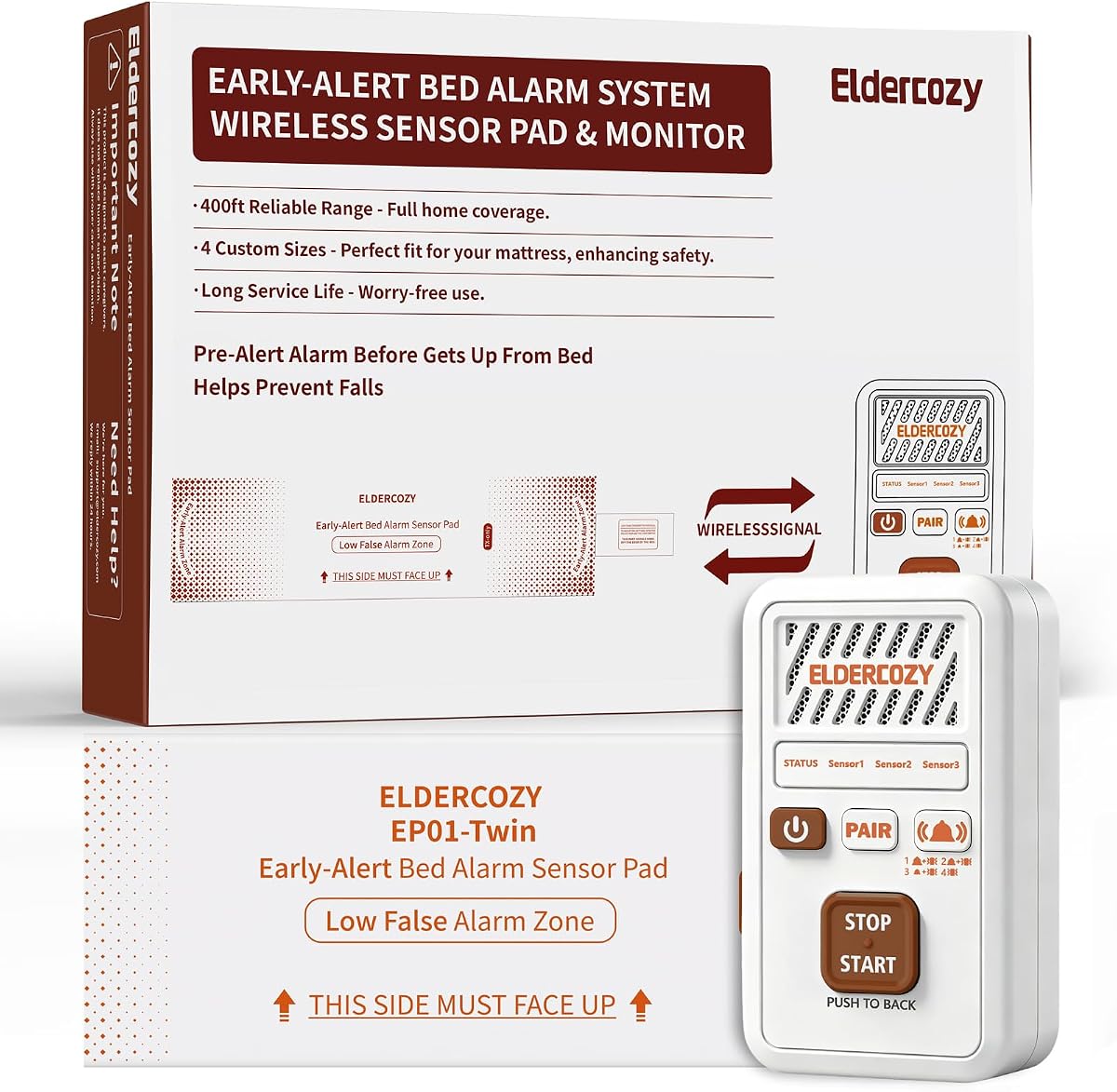
This early alert system stands out for its comfort and advanced detection features. It carries a high rating of 4.8 stars based on customer feedback. The system uses a wireless pager and a sensor pad designed to alert caregivers before a patient stands.
We may earn a commission when you buy through this link, at no additional cost to you.
The TPU composite material is soft and skin friendly. Unlike noisy PVC pads it does not crunch when a person rolls over. This ensures uninterrupted sleep for both the patient and the caregiver. The wireless signal reaches up to 400 feet allowing freedom of movement.
A unique Caregiver Mode lets you pause the alarm for 20 minutes while assisting your loved one. This prevents false alarms during routine care tasks. The system runs on replaceable batteries which extends its lifespan significantly compared to disposable units.
This product is ideal for caregivers seeking a balance of comfort and reliability. It is particularly useful for patients who are sensitive to noise or movement. The early alert feature provides crucial time to assist and prevent falls effectively.
The TPU material ensures comfort by eliminating noise and crinkling sounds common with older sensors.
The sensor triggers when the patient sits on the edge of the bed rather than after they have left it.
We may earn a commission when you buy through this link, at no additional cost to you.
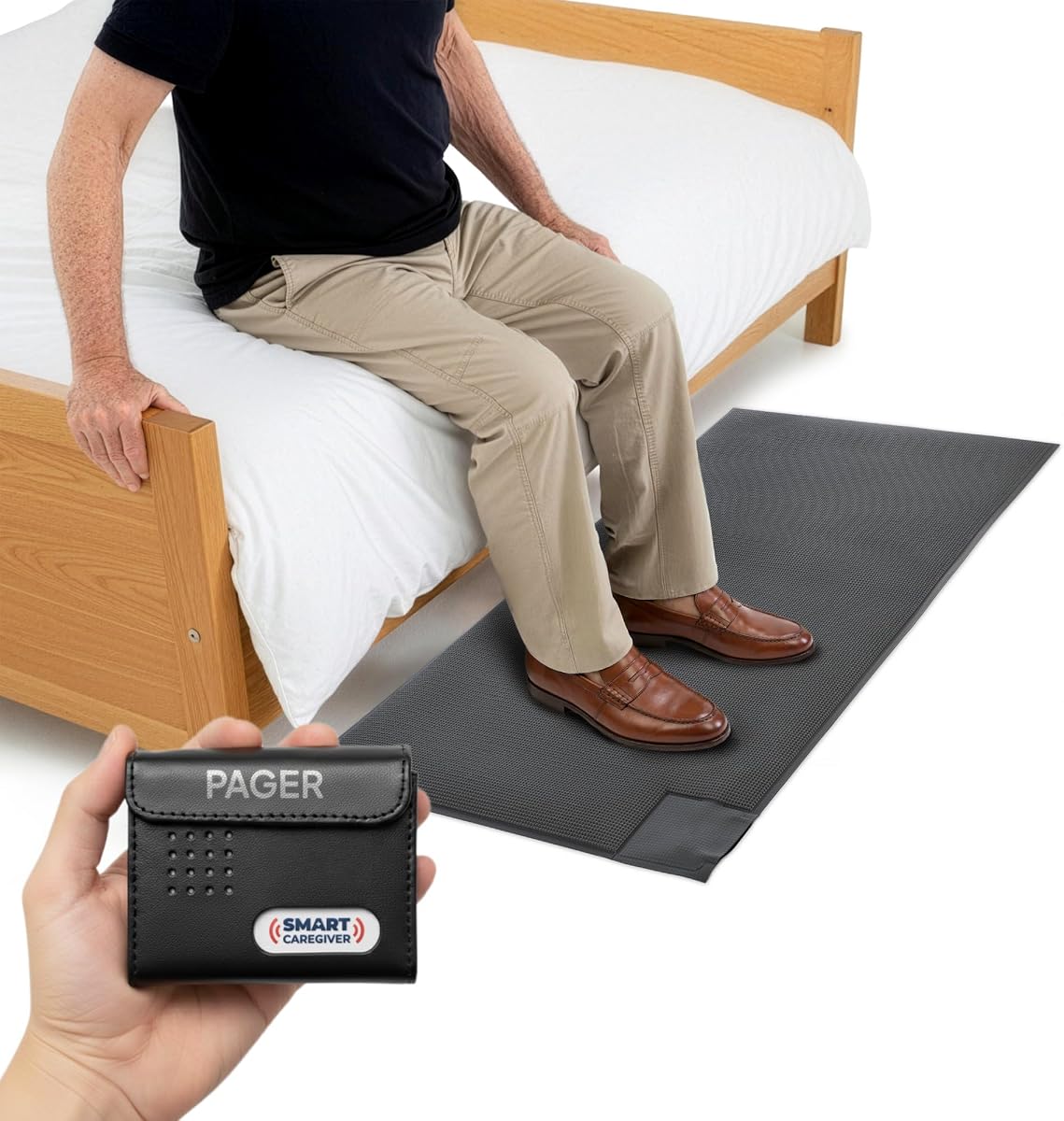
This floor mat alarm offers a robust solution for fall prevention without placing sensors on the bed. It is designed to alert caregivers when a patient steps onto the mat near the bed or door. The system has a strong reputation for durability and reliability.
We may earn a commission when you buy through this link, at no additional cost to you.
The mat itself is durable and to incontinence protection. It connects wirelessly to a pager that the caregiver can carry. This ensures that the patient is not startled by loud alarms in their room while the caregiver receives a discreet notification.
The wireless range allows caregivers to move throughout the home without losing the connection. You can monitor multiple devices with a single pager for comprehensive coverage. The company offers excellent customer support with decades of experience in senior safety.
This system is best suited for patients who may wander or leave their rooms frequently. It works well in hospitals nursing homes and private homes. The durable design makes it a long term investment for safety and peace of mind.
The mat is built to withstand daily use and can be cleaned easily for hygiene.
Alerts are sent to the caregiver pager ensuring the patient is not disturbed by noise.
We may earn a commission when you buy through this link, at no additional cost to you.
This budget friendly option uses a motion sensor placed on the floor rather than a bed pad. It detects when a patient's foot touches the ground signaling that they are standing up. This design helps avoid false alarms caused by shifting in bed.
We may earn a commission when you buy through this link, at no additional cost to you.
The wireless range is exceptional allowing for monitoring across large open areas. The alarm does not sound in the patient's room which prevents startling them. You can adjust the volume levels to suit your environment comfortably.
It offers dual power supply options for the receiver which adds to its convenience. The setup is straightforward and requires no special tools. It is a practical choice for those needing a simple and effective monitoring solution.
Ideal for families on a budget this system provides essential safety features. It is versatile enough for use at the bedside or near a door. The lack of loud room alarms makes it a considerate choice for shared living spaces.
Placing the sensor on the floor reduces false alarms from restless movement in the bed.
The option to use batteries or USB ensures you are never without power.
We may earn a commission when you buy through this link, at no additional cost to you.
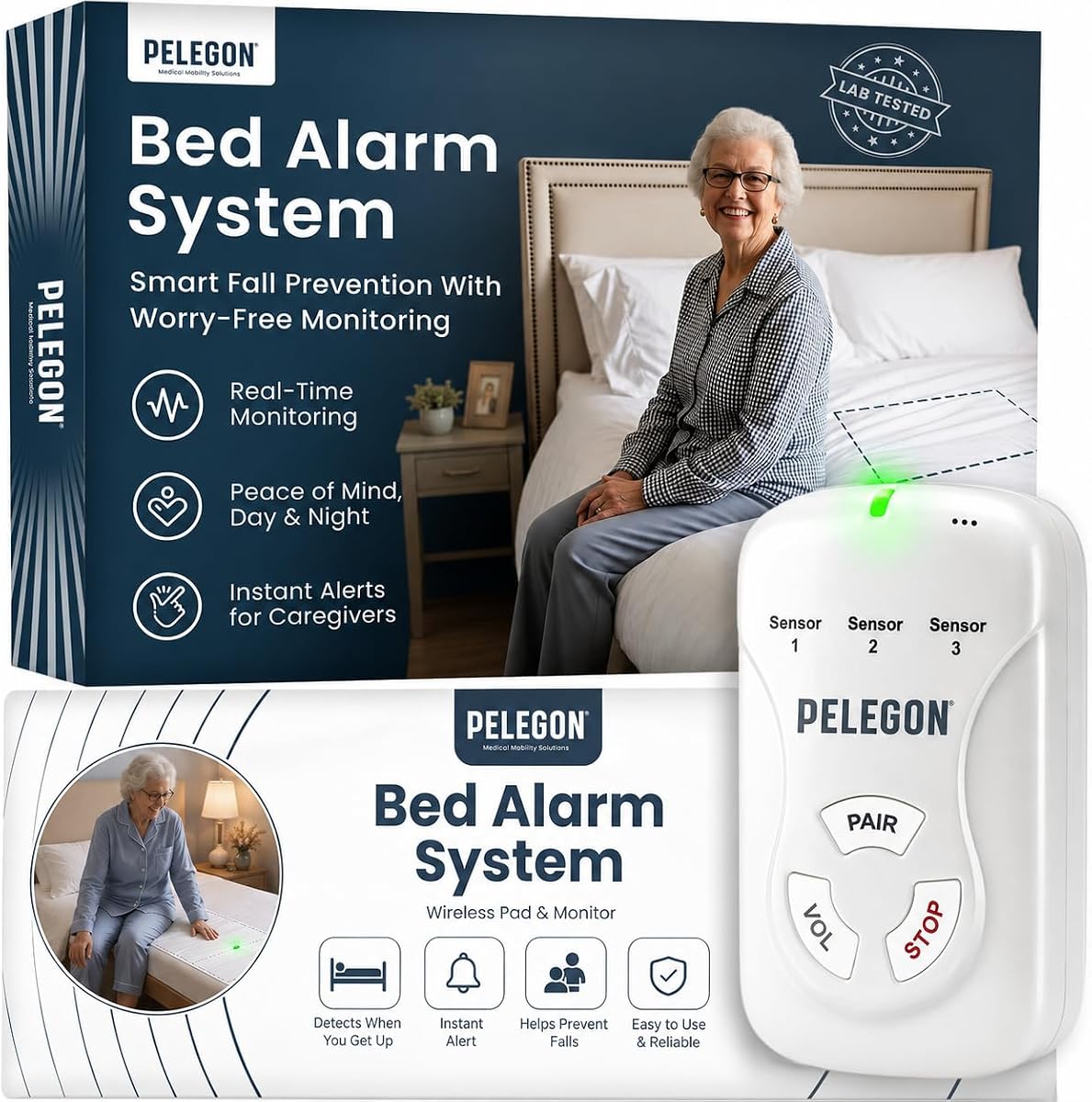
PELEGON offers a straightforward sensor pad that connects to a wireless pager. It is designed to help reduce fall risk by alerting caregivers when movement is detected. The system is easy to set up without any tools required.
We may earn a commission when you buy through this link, at no additional cost to you.
You can choose between sound alerts or vibration-only modes. This flexibility is useful for shared rooms or overnight care. The range allows caregivers to stay in another room while maintaining supervision over the patient.
The setup process is simple and quick. You place the pad under the sheet and connect the system. This simplicity makes it accessible for family caregivers who may not be tech savvy.
This product is great for those prioritizing ease of use and customization. It provides a reliable layer of safety for dementia patients. The vibration option ensures you can be alerted quietly without disturbing others.
The vibration mode allows for discreet alerts that do not disturb sleep.
The system detects movement as the patient begins to rise to prevent falls.
We may earn a commission when you buy through this link, at no additional cost to you.
This bed alarm uses a soft vinyl sensor pad that is sealed for incontinence protection. It alerts you when pressure is removed from the pad indicating the patient has left the bed. The unit can be mounted on a bed or wall.
We may earn a commission when you buy through this link, at no additional cost to you.
The sensor pad is durable and designed for daily use. It can be cleaned easily with a wet cloth which simplifies hygiene maintenance. You can mount the monitor in various locations for accessibility.
The alarm includes a reset button to silence sounds when needed. It has indicator lights to show battery and sensor status. This ensures you always know if the system is functioning correctly.
This model is a classic choice for caregivers needing a reliable wired system. The in room alarm feature is helpful to remind patients to wait for assistance. It is a practical tool for daily safety needs.
The sensor pad is sealed to protect against incontinence and spills.
Indicator lights ensure you are always aware of the system power status.
We may earn a commission when you buy through this link, at no additional cost to you.
This system uses a full-coverage weight sensor pad to detect bed exit. It alerts caregivers wirelessly when pressure is removed from the pad. The pager offers both sound and vibration alert options for flexibility.
We may earn a commission when you buy through this link, at no additional cost to you.
A key feature is the expandable monitoring network. You can connect up to six different sensors to the single pager. This allows for monitoring beds chairs and doorways simultaneously for comprehensive coverage.
The pad is engineered to reduce false alarms with an extra-large contact sensor. It places under the shoulders to detect immediate exit attempts. This design builds trust in the reliability of the alerts.
This solution is ideal for facilities or homes needing multi-device monitoring. It supports caregivers who need to manage several areas at once. The expandable network makes it a versatile choice for long term use.
The system supports multiple sensors so you can monitor different locations at once.
The large contact sensor helps ensure accurate detection of patient movement.
We may earn a commission when you buy through this link, at no additional cost to you.
CallToU provides a flexible sensor system with many alert options. It uses a wireless motion sensor on the floor to detect footsteps. The receiver supports 18 different ringtones and five volume levels.
We may earn a commission when you buy through this link, at no additional cost to you.
The sensor supports rotation to prevent false alarms from movement. You can turn it off or switch to silent modes as needed. This flexibility makes it suitable for various care environments.
The receiver uses Type-C charging and is portable. This allows you to move around without restrictions while monitoring your loved one. The sensor uses replaceable AAA batteries for long term use.
This system is a good fit for those who want variety in alert tones. It is practical for preventing wandering and bed exits. The silent mode ensures privacy while maintaining safety monitoring.
You can choose from many ringtones to find one that suits your needs.
The sensor can be rotated to adjust detection angles and avoid false triggers.
We may earn a commission when you buy through this link, at no additional cost to you.
This product focuses on durability and ease of use with factory paired devices. It eliminates the need to manually pair the sensor and receiver. The setup is simple and requires only loading batteries to begin.
We may earn a commission when you buy through this link, at no additional cost to you.
It offers a long wireless range of up to 918 feet in open areas. This is useful for large homes or facilities. The receiver allows for switching between sound and light alert modes easily.
The system includes a Micro USB cable for power. This reduces the need to find specific power outlets. The device passes durability tests ensuring it can withstand daily use over time.
Ideal for caregivers who want a ready to use system this model is reliable. The long range provides freedom of movement. The service support ensures you have help if any issues arise.
Factory pairing means you can start monitoring immediately after setup.
The Micro USB option adds versatility to how you power the receiver.
We may earn a commission when you buy through this link, at no additional cost to you.
This system includes both bed and chair sensor pads for versatile monitoring. It alerts you when the person attempts to get out of either a bed or a chair. The monitor is portable and can be clipped to a headboard.
We may earn a commission when you buy through this link, at no additional cost to you.
The pads are made of soft vinyl with a foam interior. They are sealed for incontinence protection and durable for daily use. You can adjust the sensitivity by moving the pad to different positions.
The monitor features convenient controls inside the battery compartment. You can easily switch between bed and chair modes using a clip. This ensures you are alerted whenever the patient tries to leave.
This dual pad system is perfect for patients who spend time sitting as well as lying down. It provides comprehensive safety against falls from any seated position. The durable pads ensure long term reliability.
This dual pad system monitors both the chair and the bed for total safety.
The vinyl pads are sealed to protect against spills and incontinence.
We may earn a commission when you buy through this link, at no additional cost to you.
This pad features pressure motion detection to monitor patient movements. It is constructed from latex free tear resistant materials for hygiene. The system alerts caregivers when the patient attempts to leave the bed.
We may earn a commission when you buy through this link, at no additional cost to you.
The wireless pager allows for customizable alerts including music and vibration. You can adjust the volume to suit day or night needs. The range is sufficient for most home environments.
The pad is easy to install with secure clips. It is designed to be portable and easy to clean. This makes it suitable for use in various settings like hospitals or nursing homes.
This model is suitable for those needing a latex free option. It offers basic functionality for fall prevention. While the rating is lower it still provides essential safety features.
The pad is free of latex to avoid allergies for sensitive skin.
This pad works well in multiple settings from homes to care facilities.
We may earn a commission when you buy through this link, at no additional cost to you.
Choosing the right bed alarm requires understanding the specific needs of the patient and the caregiver. This section outlines key factors to consider before purchasing a system.
There are two main types of sensors: bed pads and floor mats or motion sensors. Bed pads detect pressure changes when a patient sits up or leaves the bed. Floor mats detect weight when a patient steps onto the floor. Motion sensors use infrared technology to detect movement near the bed.
Choose bed pads for early detection before the patient stands. Choose floor mats for preventing wandering and door exits.
Wireless range determines how far you can move from the patient while remaining connected. Some systems offer up to 900 feet in open areas. This is important if you live in a large home or have other rooms to attend to.
Ensure the range covers your needs to avoid signal loss during critical moments.
Different alerts modes include sound, vibration, and light. Vibration is ideal for sleeping caregivers or shared rooms to prevent disturbance. Sound alerts are useful if the caregiver is awake and nearby.
Look for adjustable volume options to customize alerts to your environment.
False alarms can reduce trust in the system. Some pads are designed to detect weight at the hips or shoulders rather than the whole body. Others use floor sensors to avoid detecting movement in bed.
Select a system with smart detection to minimize unnecessary alerts.
Some systems require complex wiring while others are tool-free. Battery operated units are easier to install but require frequent checks. Plug-in units ensure continuous power but need outlets nearby.
Choose a setup method that fits your ability to install and maintain the device.
Some systems allow you to add multiple sensors to one pager. This is useful for monitoring chairs doors and beds simultaneously. Expandable networks provide comprehensive coverage for complex care needs.
Consider future needs and if you might want to add sensors later.
Devices run on batteries or AC power. Batteries offer flexibility but need replacing. AC power provides reliability but limits placement. Some devices offer dual power options for the best of both worlds.
Ensure you can maintain the power source to keep the device running 24 7.
The sensor pad or mat should be durable and easy to clean. Look for materials resistant to incontinence and tears. A durable product ensures longevity and consistent performance.
Check for incontinence protection and washable materials for hygiene.
Proper installation is critical for the alarm to function correctly. For bed pads place them flat under the fitted sheet usually at the shoulder or hip level. Secure the sensor to the bed frame or mattress to prevent shifting.
Regular testing ensures the system is working as expected. Check the battery levels weekly and replace them as needed. Test the alarm by removing pressure from the pad to confirm it alerts the pager.
Keep the sensor and receiver clean to maintain performance. Wipe the pad with a damp cloth if it gets soiled. Keep the receiver away from moisture and extreme heat to avoid damage.
Most sensor pads last for several years if handled with care. The lifespan depends on usage frequency and cleaning methods. Replacing batteries helps extend the life of the system.
Some manufacturers recommend using the alarm on standard mattresses. Waterbeds may interfere with pressure sensors. It is best to check the user manual for compatibility.
Most modern alarms send alerts to a caregiver pager instead of a loud room alarm. This prevents startling the patient while still providing safety monitoring.
Most standalone bed alarms do not require a monthly subscription. They operate independently using batteries or power cords. Ensure you check if any model requires extra fees.
Some systems offer chair pads designed to detect weight on a seat. Check if the product includes a chair sensor or supports chair attachment options.
Many devices have low battery indicators to warn you when power is low. If the battery dies the device will stop working. Regular checks help avoid unexpected downtime.
Many pads are sealed for incontinence protection and can be wiped clean. They are not fully waterproof and should not be submerged in water.
Factory paired units come connected out of the box. If you buy separate units follow the manual to synchronize the signal. This ensures the receiver responds to the sensor.
We reviewed ten top bed alarms for elderly and dementia patients to help you make a safe choice. The Twin Size Wireless Bed Alarms offer the best overall balance of comfort and early alert features.
Prioritize sensor accuracy and wireless range when selecting a system. A device that reduces false alarms builds trust with caregivers. Ensure the battery power meets your daily routine needs.
Prices and availability may change so check current details before buying. A reliable alarm provides essential safety and peace of mind for families. Choose the model that best fits your caregiving situation.